



Taxes in Sweden
Your guide to the Swedish tax system, from income tax to what taxes help pay for.
1. Tax for individuals in Sweden
Income from employment in Sweden is first and foremost subject to local income tax. The rate varies by municipality, from roughly 29 to 35 per cent, with an average of around 32 per cent.
Those earning above a certain income threshold set by the Swedish Tax Agency (link in Swedish) pay an additional 20 per cent in state income tax on income above that threshold.
A basic tax-free allowance reduces the amount of salary or wages subject to tax.
Capital gains are generally taxed at 30 per cent, while profits from property sales are taxed at 22 per cent. Interest paid on loans and mortgages may qualify for a tax deduction.
Sweden has no inheritance tax or wealth tax.
Tax relief for foreign 'experts'
Foreign citizens who are high earners or are categorised as 'experts', 'researchers' or 'key staff' can apply for a tax relief if they intend to stay in Sweden for a maximum of seven years.
2. Corporate tax in Sweden
Sweden currently levies a corporate income tax of 20.6 per cent, which is relatively low in international comparison.
Sweden has applied this corporate tax rate since 2021. The rate has gradually fallen from 28 per cent in 2008.

























3. VAT in Sweden
The standard VAT rate in Sweden is 25 per cent on most goods and services. Reduced rates of 12 and 6 per cent apply to certain goods and services, such as food, books and passenger transport within Sweden.
Value-added tax (VAT) is mervärdesskatt in Swedish, usually shortened to moms.
The Swedish Tax Agency's website has an overview of which VAT rates apply to which goods and services.
4. What do taxes pay for in Sweden?
Taxes in Sweden help fund public services and the welfare system, including healthcare, education and social protection. The largest share of public spending goes to social protection, which includes pensions and childcare, among other things.
According to preliminary figures from Statistics Sweden (link in Swedish), taxes in Sweden amounted to 40.5 per cent of GDP in 2025.
5. What does the Swedish Tax Agency do?
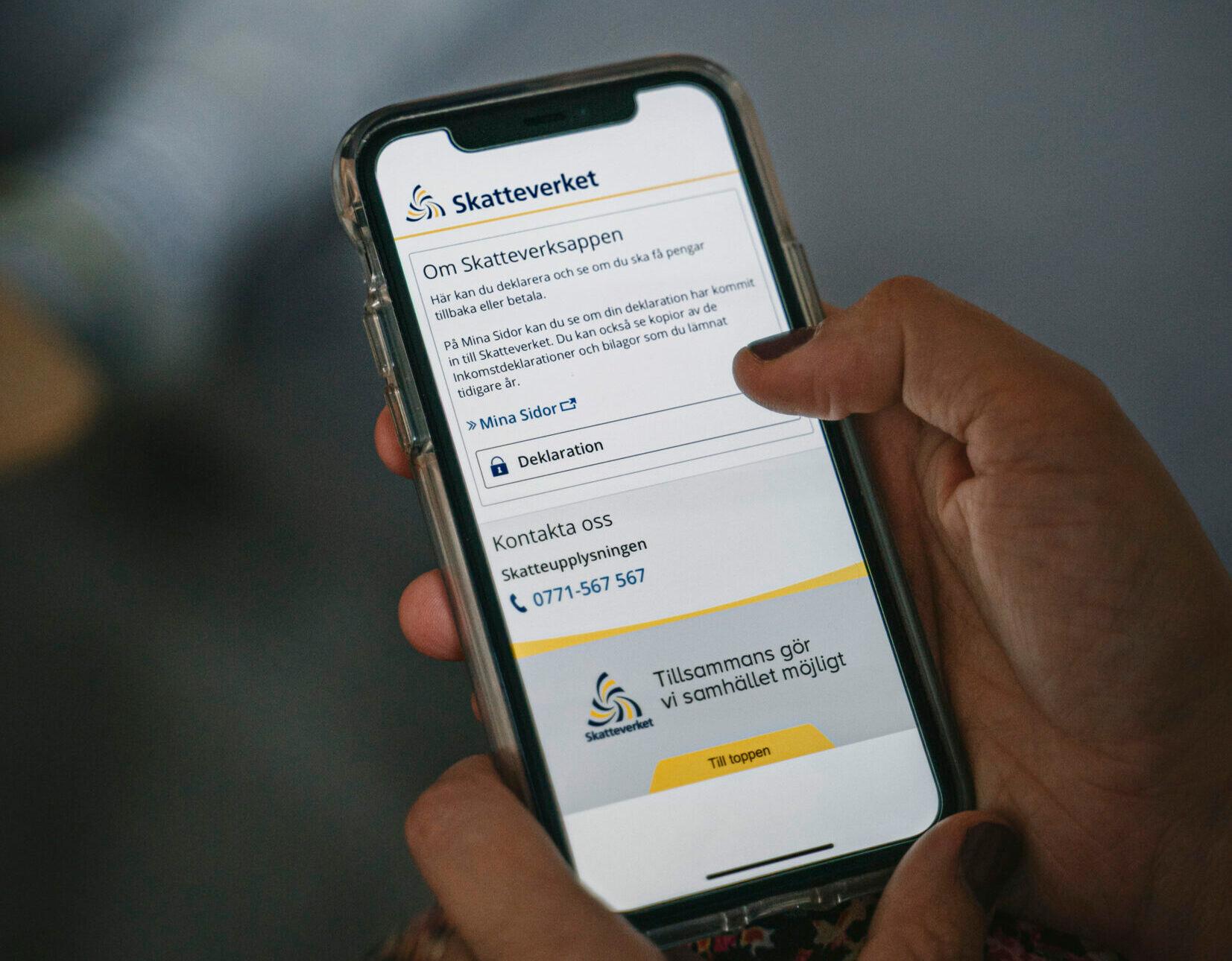
The Swedish Tax Agency (Skatteverket) not only collects taxes, it also manages Sweden’s population register.
If you live in Sweden, you will deal with the agency on matters such as personal identity numbers, civil registration and, of course, taxes.