



Starting a business in Sweden
Starting a business in Sweden? First choose a business type and register for tax.
Starting a business in Sweden is relatively straightforward, but the exact requirements depend on the type of business you want to run. This guide explains the main rules and steps for starting and running a business in Sweden.
1. Check if the business you want to start requires permits or licences
First things first: before getting too far into your plans, check whether the field you want to work in requires permits or licences. Some professions and industries require formal qualifications or approval before you can start operating.
Verksamt.se – a website set up by the Swedish Companies Registration Office, the Tax Agency and the Agency for Economic and Regional Growth – has a handy list of the various trades, professions and businesses that require permits, as well as contact details for the bodies that issue them.
A selection of Swedish startup incubators
Umeå Biotech Incubator (UBI) – in partnership with Umeå University, among others
Arctic Business – affiliated with Luleå University of Technology
Blekinge Business Incubator (BBI) – south-east Sweden
Chalmers Ventures – affiliated with Chalmers University of Technology, Gothenburg
Create – affiliated with Mälardalen University
DRIVE – part of Karolinska Institutet in Stockholm, specialised in life sciences
Inkubera – based in Örebro and Karlskoga
Ideon Science Park – in the Lund Innovation District, near Lund University
LEAD – owned by Linköping University
Movexum – owned by Region Gävleborg
2. Register your business for tax
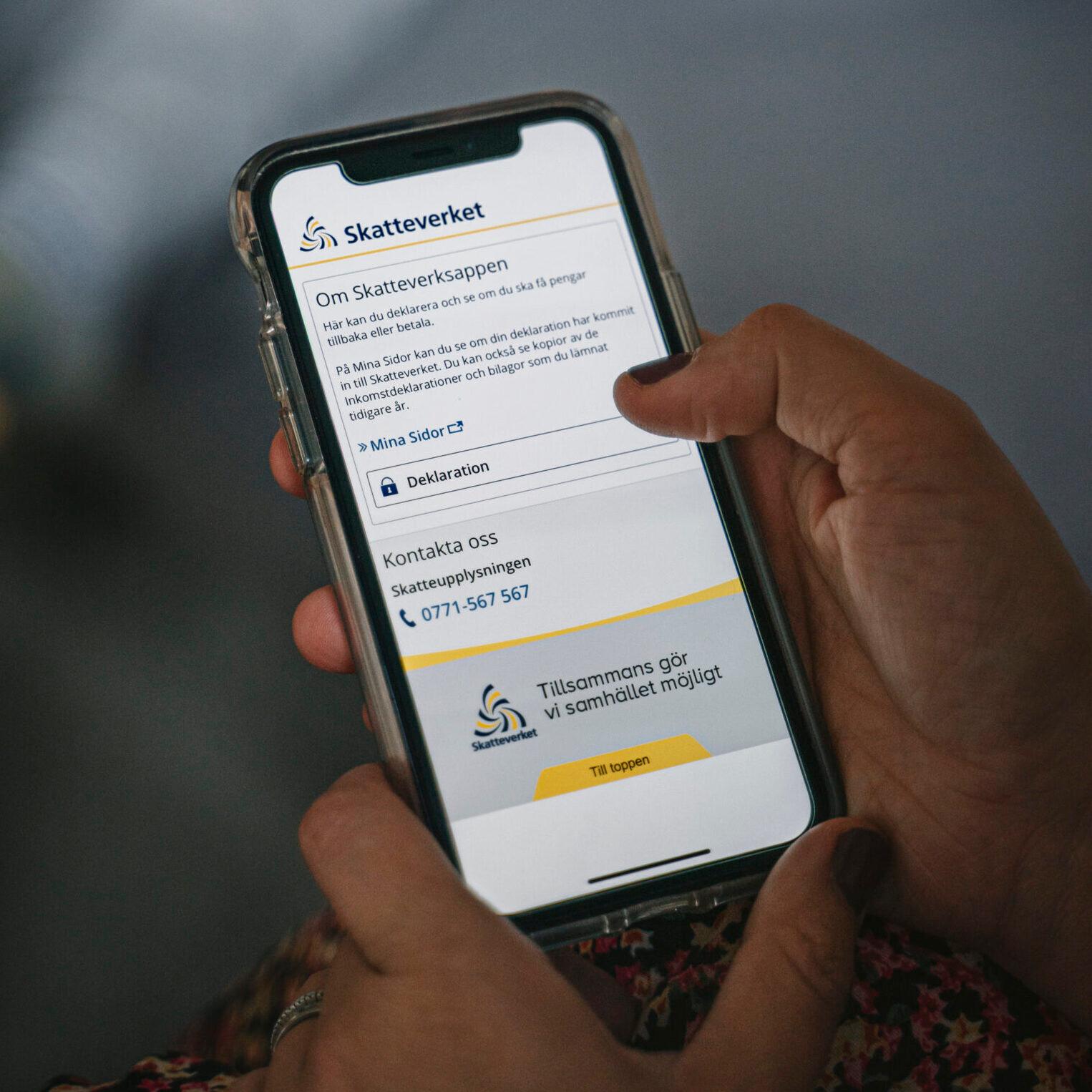
Whether you're setting up as a sole trader or a limited company, you'll need to register for F-tax (F-skatt). F-tax shows that you operate as a business owner rather than an employee and that you’re responsible for your own taxes and social security costs.
As a sole trader, your business will be identified by your personal identity number (personnummer) which is allocated to you by the Swedish Tax Agency (Skatteverket).
The key step in starting as a sole trader is registering for F-skatt – ‘F tax’ (the ‘F’ stands for företagare – entrepreneur). F-skatt basically means that you undertake work as an entrepreneur and not as an employee. You are responsible for administering your tax and social security payments – not those contracting you.
The Tax Agency offers a starting point on its F-tax approval web page, including information on how to apply. The Tax Agency also offers free webinars in both Swedish and English giving step-by-step help about how to start up a business.
4. Do you need to register your business name?
No, registering your business name is not an obligatory step, but still a wise move. It helps protect your business name and reduces the risk of someone else using it.
To register your business name, visit the Swedish Companies Registration Office website (Bolagsverket). They will process your registration for a fee.
5. Create a business plan
A business plan can help you clarify your goals, understand your market and convince others to invest in your idea. It doesn't need to be long or complex. At its core, it's simply a description of what you plan to do and how you plan to do it.
If you're looking for guidance, Verksamt.se provides practical advice on what Swedish banks, investors and authorities typically look for in a business plan.
Grasping the culture
As you build your network, you'll also get a feel for Swedish business culture.
Business relationships are often informal, but punctuality, reliability and clear communication are highly valued.
While it's possible to run a business in English, learning some Swedish can make it easier to build relationships and understand your customers.
6. Research your market
It's worth starting your market research long before you register a business or write a business plan. Understanding your customers, competitors and the overall market can help you avoid costly mistakes later on.
Statistics Sweden is a valuable source of information about Sweden and its demographics, covering everything from population and age to business activity and industrial capacity. Industry organisations (branschorganisationer) can also provide useful insights into market conditions, regulations and developments in your field.
7. Build your network
Building a network can help you find customers, partners and mentors.
You could contact your local branch of the Swedish Jobs and Society Foundation (Nyföretagarcentrum, link in Swedish). They provide advice to new businesses and holds regular events around the country. The half-state-owned organisation Business Sweden can help you connect with other companies.
8. Stay on top of your bookkeeping
If bookkeeping and tax rules aren't your strong suit, consider hiring an accountant or accounting consultant. It can save you time, help you avoid mistakes and leave you free to focus on running your business.
At the same time, it's worth learning the basics yourself. Even if you hire professional help, you're still responsible for understanding how your business finances work.
The Association of Swedish Accounting Consultants can help you find a qualified accounting consultant in your area who can both support your business and help you learn the basics.
9. Hire staff legally
As your business grows, you may decide to hire staff. Before you do, it's worth familiarising yourself with the basics of Swedish employment law.
Employment conditions in Sweden are regulated by the Employment Protection Act (Lagen om Anställningsskydd, or LAS, link in Swedish). The law states that employment contracts are normally for an indefinite term, unless otherwise agreed, and sets out the rules for different types of fixed-term employment.
Swedish employment law also includes provisions on parental leave, holiday entitlement and pensions. If you're not ready to hire, another option is to subcontract work to sole traders who have registered for F-tax.
Translations of the relevant labour laws can be found on the Swedish government’s website.