

Parenting in Sweden
Here’s a brief overview of what it’s like to be a parent in Sweden, including rights and responsibilities.
Sweden is often hailed as one of the best countries for raising children. The country’s approach to parenting weaves together robust child protection, generous parental leave, universal healthcare, tax-funded education and parenting support.
How does parental leave work in Sweden?
Sweden offers one of the world’s most generous and flexible parental leave system, with employees having the right to full leave from work for 1.5 years.
The system is designed to encourage both women and men to take time off with their children, and parents also have access to childcare at an affordable cost.
To further promote equality, a portion of parental leave is reserved for each parent and cannot be transferred.

Flexibility to share and care
Parents also have the option to share some of their parental leave with close relatives or family friends, making it easier for families to divide caregiving responsibilities.
Around the time of childbirth, the non‑birthing parent is entitled to take time off to support the family. If a child becomes ill, parents can receive temporary benefits that allow them to stay home and care for the child when needed.
Reduced working hours for work–life balance
Beyond paid parental leave and a monthly child allowance, Swedish law allows parents to reduce their working hours until the child turns eight or has not yet finished their first school year. Certain collective agreements entitle parents to reduced working hours until the child turns twelve.
Public and private preschools are subsidised by taxes and are widely available for children from the age of one. This helps parents balance work and childcare.
After schooltime, children can attend fritidshem (leisure-time centres), which offer care and activities before and after school hours.


Sweden was the first country in the world to ban corporal punishment of children altogether in 1979. Photo: Nanaka Adashi/imagebank.sweden.se


Around the time of childbirth, the non‑birthing parent is entitled to take time off to support the family. Photo: Alexander Mahmoud/imagebank.sweden.se

Swedish parental leave is designed to be shared between the parents. Photo: Alexander Hall/imagebank.sweden.se


If a child becomes ill, parents can receive temporary benefits that allow them to stay home and care for the child when needed. Photo: Lisa Öberg/Scandinav/imagebank.sweden.se

Swedish law says that children have the right to information and to express their views. Photo: Plattform/Scandinav/imagebank.sweden.se

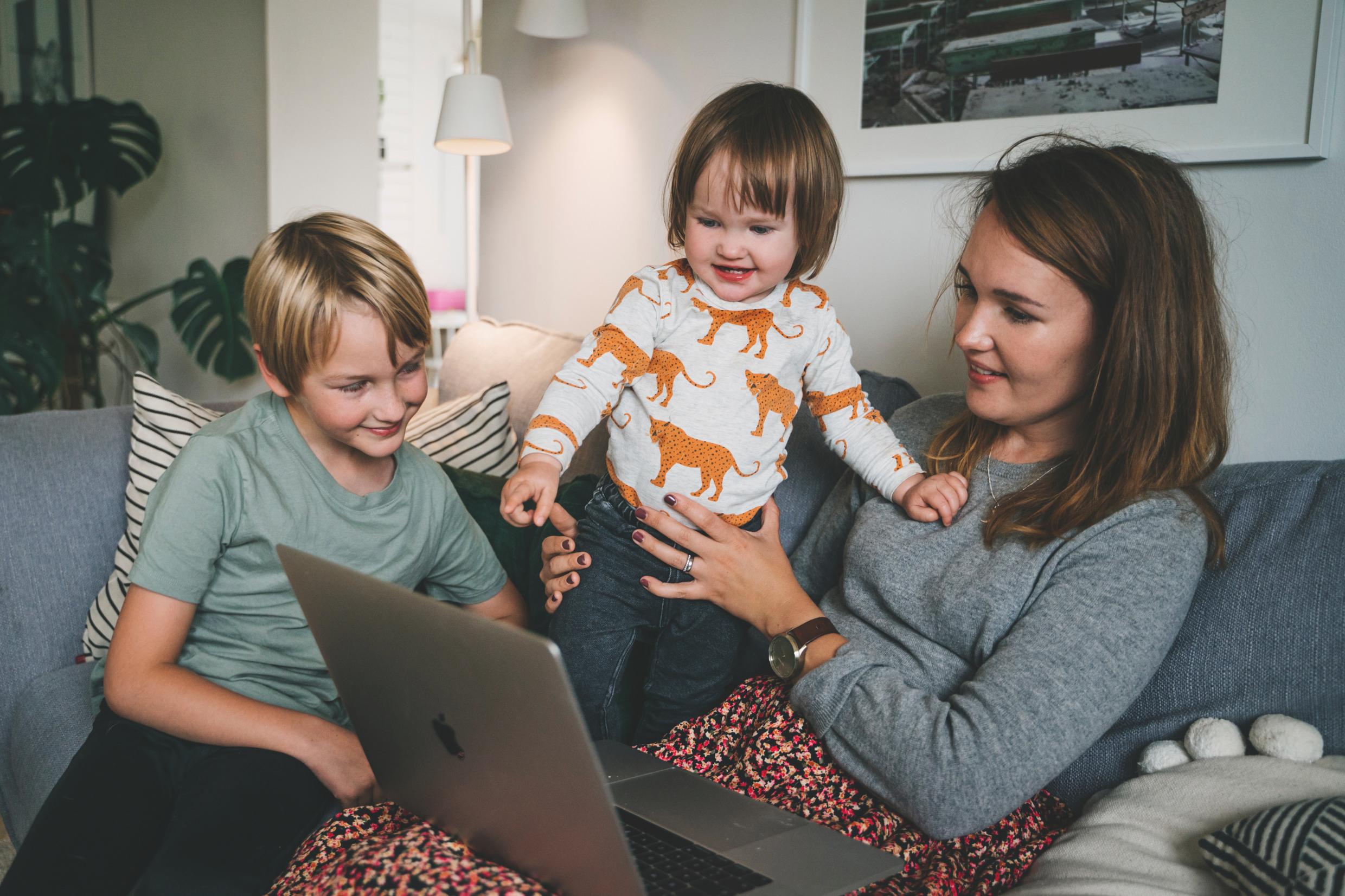
Swedish family policies aim to make it possible for parents to combine a career with family life. Photo: Maskot/Folio/imagebank.sweden.se

Around 70 per cent of children in Sweden live with both their parents, according to Statistics Sweden (figures from 2023). Photo: Susanne Walström/imagebank.sweden.se
Sweden was the first country in the world to ban corporal punishment of children altogether in 1979. Photo: Nanaka Adashi/imagebank.sweden.se
Around the time of childbirth, the non‑birthing parent is entitled to take time off to support the family. Photo: Alexander Mahmoud/imagebank.sweden.se
Swedish parental leave is designed to be shared between the parents. Photo: Alexander Hall/imagebank.sweden.se
If a child becomes ill, parents can receive temporary benefits that allow them to stay home and care for the child when needed. Photo: Lisa Öberg/Scandinav/imagebank.sweden.se
Swedish law says that children have the right to information and to express their views. Photo: Plattform/Scandinav/imagebank.sweden.se
Swedish family policies aim to make it possible for parents to combine a career with family life. Photo: Maskot/Folio/imagebank.sweden.se
Around 70 per cent of children in Sweden live with both their parents, according to Statistics Sweden (figures from 2023). Photo: Susanne Walström/imagebank.sweden.se
Sweden was the first country in the world to ban corporal punishment of children altogether in 1979. Photo: Nanaka Adashi/imagebank.sweden.se
Around the time of childbirth, the non‑birthing parent is entitled to take time off to support the family. Photo: Alexander Mahmoud/imagebank.sweden.se
Swedish parental leave is designed to be shared between the parents. Photo: Alexander Hall/imagebank.sweden.se
If a child becomes ill, parents can receive temporary benefits that allow them to stay home and care for the child when needed. Photo: Lisa Öberg/Scandinav/imagebank.sweden.se
Swedish law says that children have the right to information and to express their views. Photo: Plattform/Scandinav/imagebank.sweden.se
Swedish family policies aim to make it possible for parents to combine a career with family life. Photo: Maskot/Folio/imagebank.sweden.se
Around 70 per cent of children in Sweden live with both their parents, according to Statistics Sweden (figures from 2023). Photo: Susanne Walström/imagebank.sweden.se
A total ban on physical punishment of children
In Sweden, parents have the primary responsibility for providing a safe, respectful and supportive upbringing for their children. This includes protecting the child’s personal integrity and never using physical punishment or degrading treatment. This is not only a social norm – it is a legally binding law.
Sweden was the first country in the world to ban corporal punishment of children altogether in 1979.







The child’s best interests come first
The Children and Parents Code (Föräldrabalken; link in Swedish) is the law that lays down what responsibilities parents have for their children. It provides the legal framework for issues related to custody, where the child lives and the child’s right to spend time and communicate with a parent they don’t live with.
This law requires judges and social workers to put the child’s best interests first in every decision. Children have the right to information and to express their views, and adults must let children have their say in matters that affect them. Their views carry more weight as they grow in age and maturity.
Parents are responsible for caring for their child, providing safety and supervision appropriate to the child’s age and development. Parents are also responsible for decisions about the child’s education and personal matters.

Schooling is mandatory
In Sweden, school attendance is mandatory (skolplikt) from the year a child turns six to the end of the tenth school year – one year of preschool class plus nine years of compulsory schooling.
Children who live in Sweden are expected to attend lessons every school day, and parents are responsible for ensuring attendance. The municipality has the duty to provide a place and follow up on absences.
Parents’ obligation to support their children financially
Financially, parents are obliged by law to share the cost of the child's support until the age of 18 – or up to 21 if the child continues full-time studies in school (not including higher education).
If parents live apart, they must arrange custody and contact in the child’s best interests and may be required to pay child maintenance. Children have the right to maintain contact with both parents and with other close adults, such as grandparents.
Public support for parents and children
Throughout a child’s upbringing, there’s a wide range of public services and programmes to support parents and their child’s wellbeing:
- From birth until school age, the local child health centre (Barnavårdscentralen, BVC) offers free health check-ups, vaccinations and guidance for parents.
- Many regions also offer parent groups and free courses to help families strengthen relationships and manage everyday challenges.
- Once children start school, the student health service (elevhälsan) offers them support. This includes regular health visits and access to psychological and social support.
For parents who require extra support – whether it's family counselling, assistance during a separation, guidance to strengthen family relationships, help connecting with others or protection from violence – the local social services are there to provide professional help and connect families with the resources they need.

Useful Swedish terms for parents
- Föräldrabalken: Children and Parents Code (family law)
- Föräldrapenning: paid parental leave
• VAB (vård av barn): temporary parental benefit when a child is ill - BVC (barnavårdscentral): child health centre
- Skolplikt: compulsory school attendance
- Elevhälsa: student health service (school nurse, doctor, psychologist, etc.)
- Fritidshem: leisure-time centres in schools
Protecting children is a shared responsibility in Sweden
Sweden ratified the United Nations Convention on the Rights of the Child (the Child Convention) in 1990, and in 2020 it was incorporated into Swedish law.
In Sweden, protecting children is a shared responsibility. If someone suspects that a child is being harmed or not receiving proper care, they are encouraged to report it to social services. Teachers, healthcare workers and other professionals who work with children are legally required to report any concerns.
What social services do when they get a report
People can make a report of concern (orosanmälan) for many reasons. It might be because a parent is seen to be struggling to care for their child, or because a child is engaging in risky behaviour.
If reports are based on misunderstandings or even false claims, social services will carefully review the information, speak with the child and parents, and close the case if they find the concerns to be unfounded.
When social services receive a report, they first assess whether the child is in immediate danger. If not, they usually invite the family to talk about the situation. In many cases, this leads to no further action. But if needed, a more detailed investigation may begin to see if the child or family needs support. Social services aim to work together with families and offer help voluntarily.
How does LVU – the Care of Young Persons Act – work in Sweden?
If the social services suspect that there is a clear risk of harm, they will decide to take a child into care under the so-called LVU (Lag med särskilda bestämmelser om vård av unga, Care of Young Persons Act) and implement it immediately.
Reasons may involve violence or degrading treatment from the family, or situations where the child puts themselves at risk, uses drugs or commits crimes. Another requirement is that social services can assume – or know – that the parents and the child do not consent to the care.
Read more about children's rights on the Swedish government's website.