


• Sweden invests more than 3 per cent of GDP in R&D.
• Sweden tops the European Innovation Scoreboard.
• Stockholm was ranked Europe’s most innovative region in 2025.
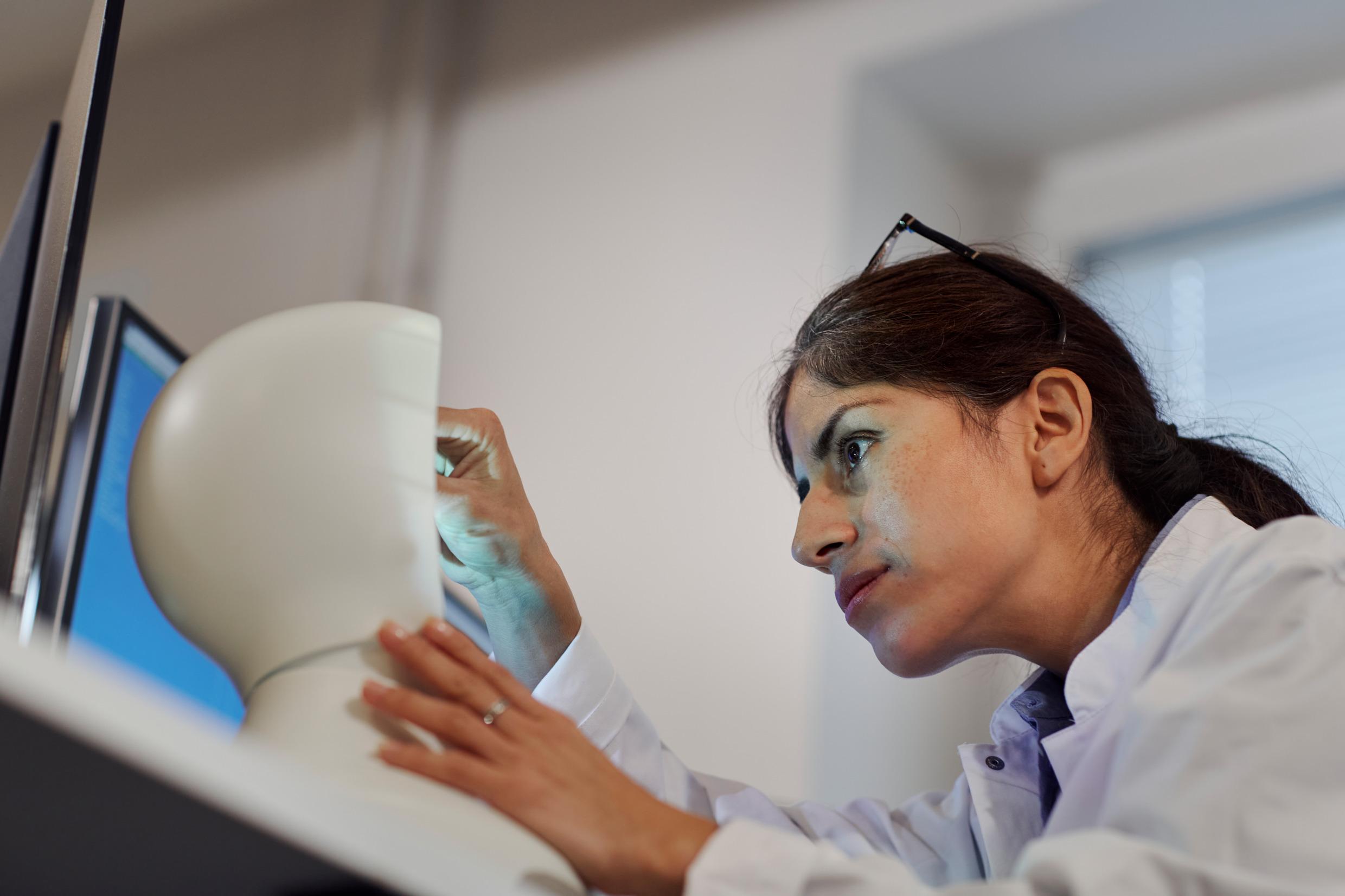
Photo, robot dog Spot: Fredric Alm/imagebank.sweden.se
A country of innovation
• Sweden invests more than 3 per cent of GDP in R&D.
• Sweden tops the European Innovation Scoreboard.
• Stockholm was ranked Europe’s most innovative region in 2025.
Photo, robot dog Spot: Fredric Alm/imagebank.sweden.se
Discover why Sweden tops global innovation rankings – from schooling to startups.
What shapes innovation in Sweden?
Sweden is consistently ranked among the world’s most innovative countries. One reason is the country’s strong belief in the value of education and knowledge and the highly skilled workforce. The country also has a well-developed research system with robust funding, where government, businesses, universities and citizens often team up to find the next great idea.
Add to this a startup ecosystem with access to funding and international markets, which has made Sweden the birthplace of numerous successful startups. All in all, Sweden is a top-ranking innovator that repeatedly tops the European Innovation Scoreboard, but more about that further down.

3 innovation initiatives for schoolchildren
- Innovationsresan (‘the path to innovation’, link in Swedish)
- Framtidsfrön ('seeds of the future')
- Ung företagsamhet (Junior Achievement Sweden, link in Swedish)
Education and a highly skilled workforce
Sweden’s long-term focus on education and research has had a major impact on the capacity for innovation. In 1842, the country introduced compulsory schooling for 7- to 13-year-olds (today for 6- to 15/16-year-olds).
This was a game-changing move, as it raised the overall level of education among the people, and became a vital component in Sweden’s journey from poor agricultural nation to prosperous innovation leader.
Swedish schools now encourage young people to try their hand at business or innovation, with a number of initiatives fostering children's spirit of innovation.
Today, about one-third of the population and more than half of the people between 25 and 34 have higher education, according to Statistics Sweden.
Looking at the current labour market, 81.1% of women and 84.9% of men are in work, according to Statistics Sweden.
How much does Sweden invest in R&D?
Sweden is committed to research and development (R&D), investing more than 3 per cent of GDP in R&D, which statistics from World Bank confirms. This is paying off: Sweden is one of the top countries when it comes to turning great ideas into intellectual property. In 2024, Sweden ranked second in Europe in the number of patent applications per million inhabitants, according to the European Patent Office.
Green technology and life sciences are two fields in which Swedish researchers and companies excel. The government has created an office of life sciences dedicated to developing and implementing a national strategy for the life sciences to further promote the field. Also, Sweden’s climate tech sector is one of the most dynamic in Europe, with about 500 active companies.

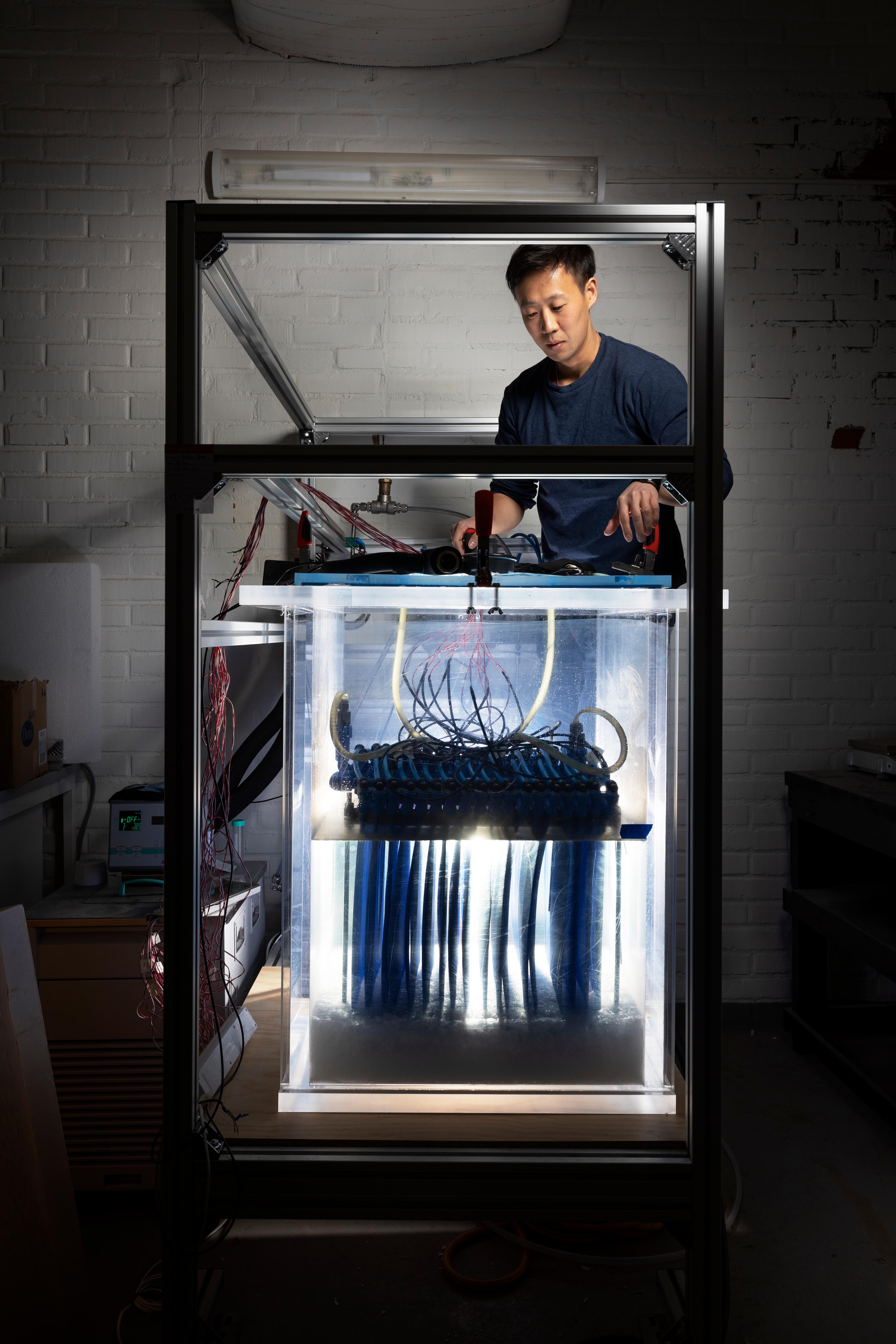
Researchers at Chalmers University of Technology in Gothenburg are developing one of the world’s first major facilities to use phase change materials in practice. That's when a material changes from for example solid to liquid. And as the material changes phase, it produces energy. Photo: Sofia Sabel/imagebank.sweden.se

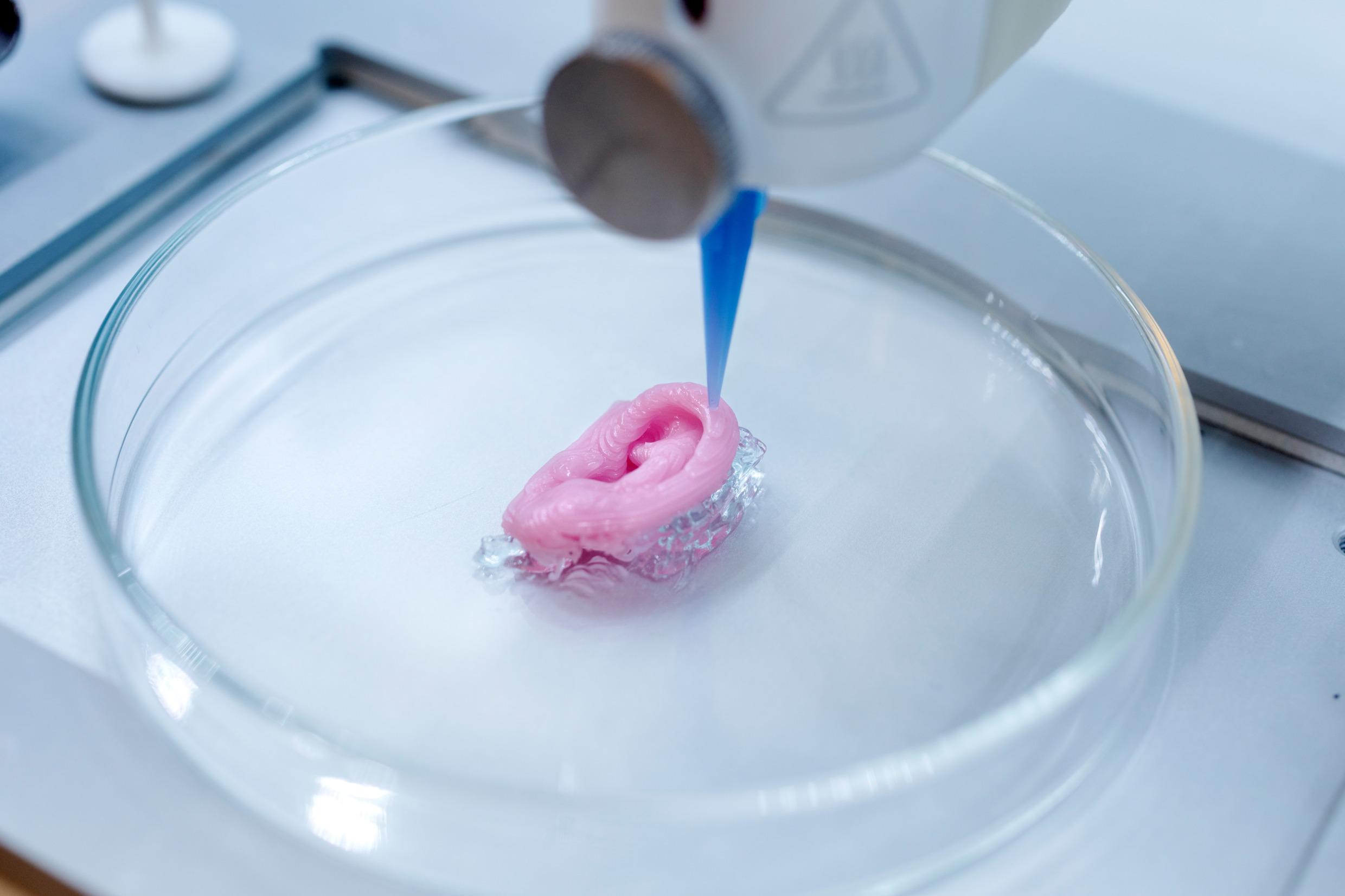
Cellink uses nanocellulose to 3D print complex models such as livers, pancreas and – ears.
Photo: Sofia Sabel/imagebank.sweden.se
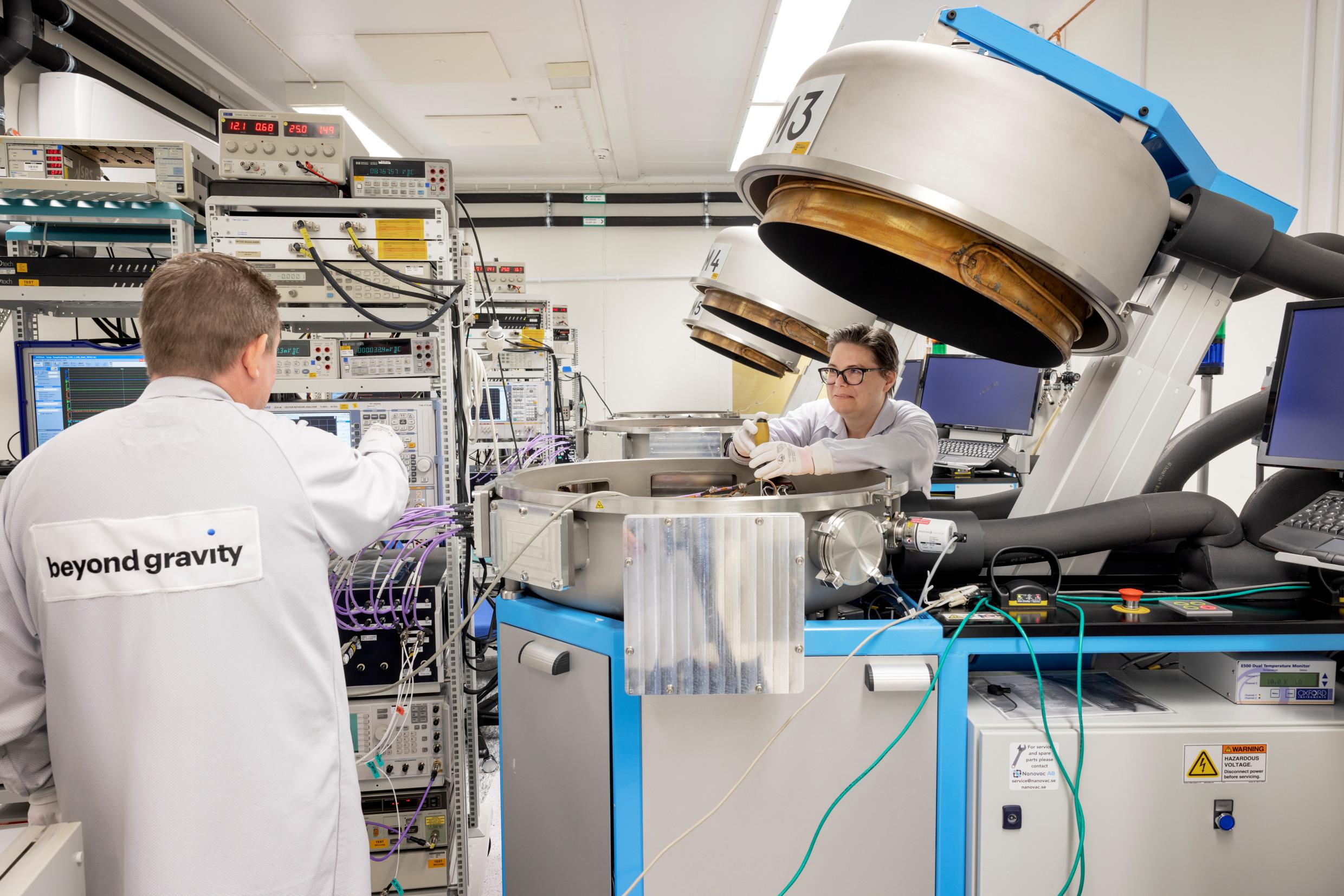
Staff at a Beyond Gravity lab in Sweden use a vacuum chamber to simulate the environment different devices will be exposed to in space when they are mounted on a satellite. Photo: Sofia Sabel/imagebank.sweden.se

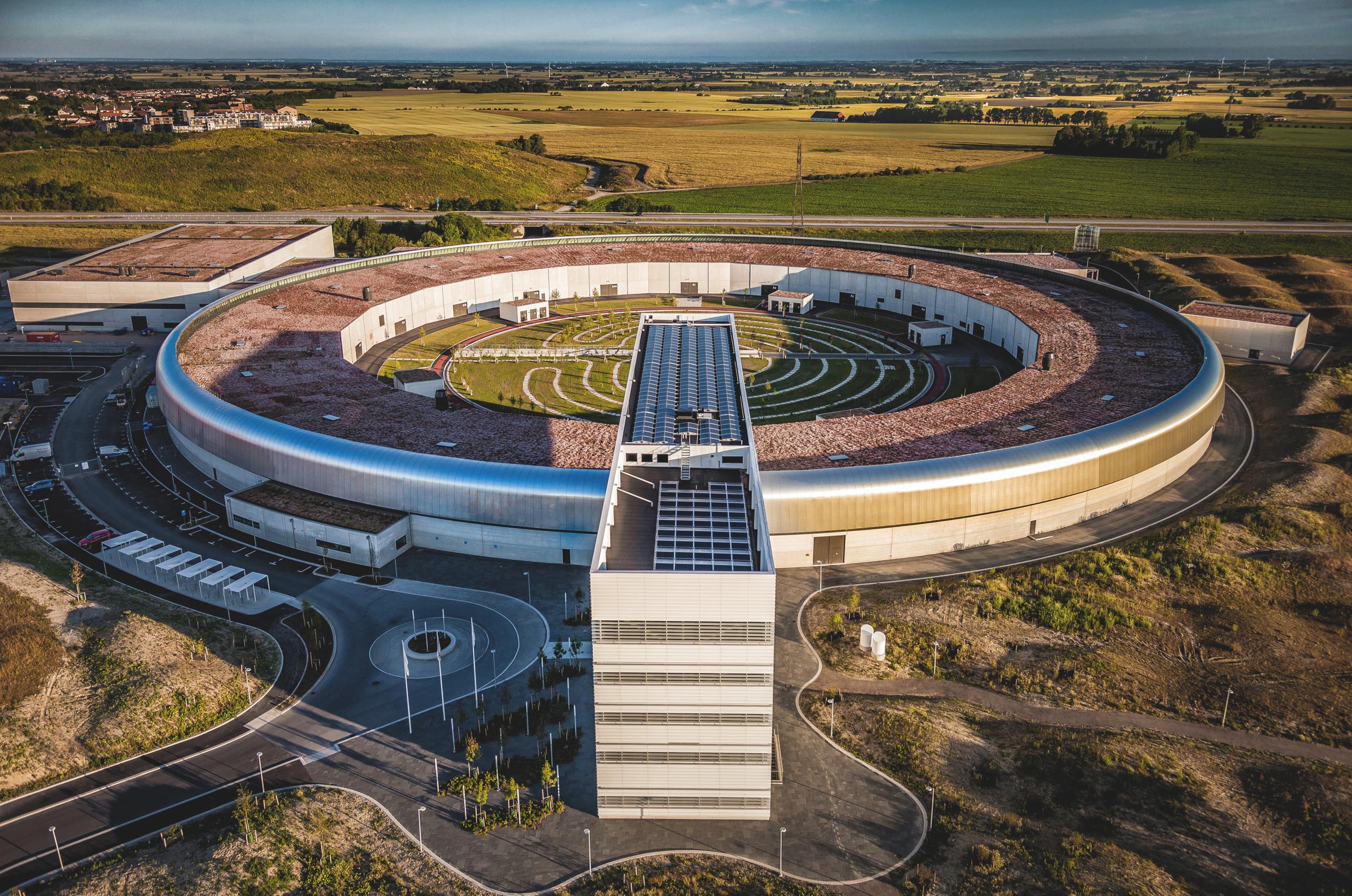
The MAX IV Laboratory is a super-modern synchrotron radiation facility in Lund, south Sweden. Photo: Per Pixel Petersson/imagebank.sweden.se
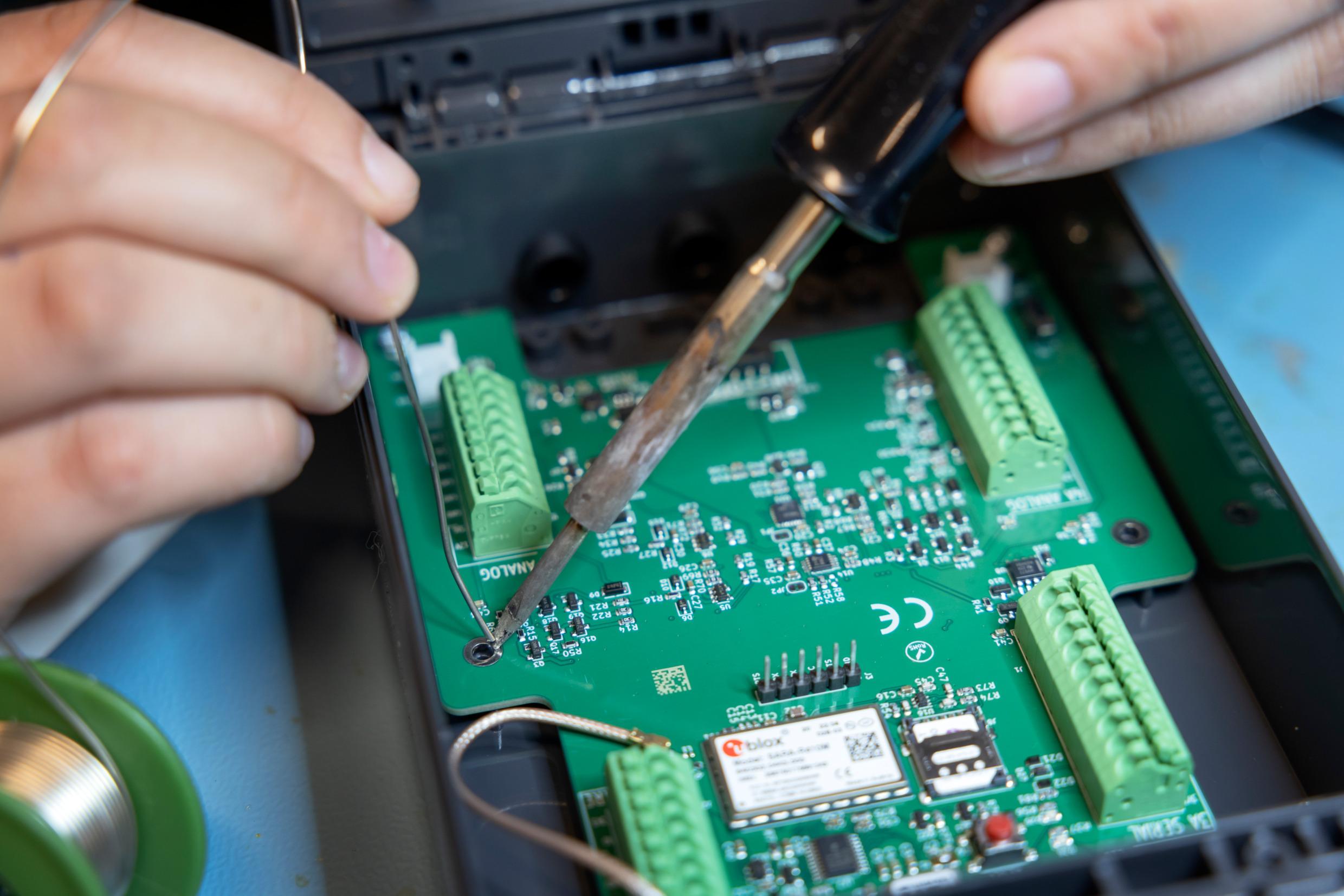
Swedish tech company Aqua Robur develops wireless communication equipment that allows water utilities to measure and detect water leakage where it’s most needed, not just where there is access to electricity. Photo: Sofia Sabel/imagebank.sweden.se


Sweden's ‘Vision Zero’ is a road safety role model based on the idea that no one should be killed or seriously injured as a result of traffic accidents. Roundabouts have proven safer than any other form of intersection. Photo: Ulf Grünbaum/Imagebank.sweden.se

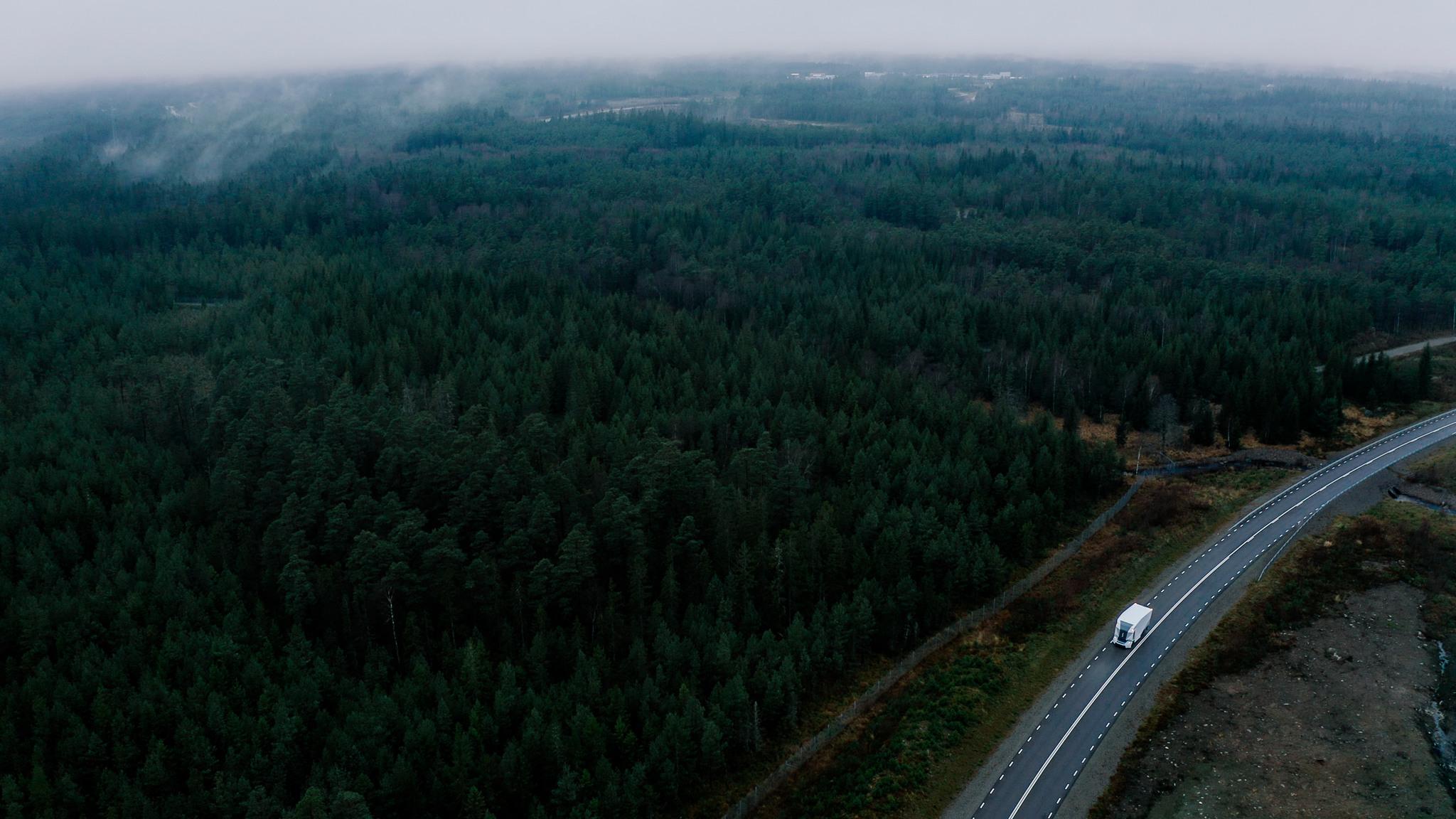
Einride and its self-driving electric trucks is one of the companies driving electrification in the Swedish transport sector. Photo: Einride
Researchers at Chalmers University of Technology in Gothenburg are developing one of the world’s first major facilities to use phase change materials in practice. That's when a material changes from for example solid to liquid. And as the material changes phase, it produces energy. Photo: Sofia Sabel/imagebank.sweden.se
Cellink uses nanocellulose to 3D print complex models such as livers, pancreas and – ears.
Photo: Sofia Sabel/imagebank.sweden.se
Staff at a Beyond Gravity lab in Sweden use a vacuum chamber to simulate the environment different devices will be exposed to in space when they are mounted on a satellite. Photo: Sofia Sabel/imagebank.sweden.se
The MAX IV Laboratory is a super-modern synchrotron radiation facility in Lund, south Sweden. Photo: Per Pixel Petersson/imagebank.sweden.se
Swedish tech company Aqua Robur develops wireless communication equipment that allows water utilities to measure and detect water leakage where it’s most needed, not just where there is access to electricity. Photo: Sofia Sabel/imagebank.sweden.se
Sweden's ‘Vision Zero’ is a road safety role model based on the idea that no one should be killed or seriously injured as a result of traffic accidents. Roundabouts have proven safer than any other form of intersection. Photo: Ulf Grünbaum/Imagebank.sweden.se
Einride and its self-driving electric trucks is one of the companies driving electrification in the Swedish transport sector. Photo: Einride
Researchers at Chalmers University of Technology in Gothenburg are developing one of the world’s first major facilities to use phase change materials in practice. That's when a material changes from for example solid to liquid. And as the material changes phase, it produces energy. Photo: Sofia Sabel/imagebank.sweden.se
Cellink uses nanocellulose to 3D print complex models such as livers, pancreas and – ears.
Photo: Sofia Sabel/imagebank.sweden.se
Staff at a Beyond Gravity lab in Sweden use a vacuum chamber to simulate the environment different devices will be exposed to in space when they are mounted on a satellite. Photo: Sofia Sabel/imagebank.sweden.se
The MAX IV Laboratory is a super-modern synchrotron radiation facility in Lund, south Sweden. Photo: Per Pixel Petersson/imagebank.sweden.se
Swedish tech company Aqua Robur develops wireless communication equipment that allows water utilities to measure and detect water leakage where it’s most needed, not just where there is access to electricity. Photo: Sofia Sabel/imagebank.sweden.se
Sweden's ‘Vision Zero’ is a road safety role model based on the idea that no one should be killed or seriously injured as a result of traffic accidents. Roundabouts have proven safer than any other form of intersection. Photo: Ulf Grünbaum/Imagebank.sweden.se
Einride and its self-driving electric trucks is one of the companies driving electrification in the Swedish transport sector. Photo: Einride
Institutions supporting innovation in Sweden
Government agencies such as the Swedish Research Council (Vetenskapsrådet) and Vinnova play a central part in the Swedish innovation system. They promote and fund research projects in a wide range of fields, from AI and artistic research to biotechnology and transport. The Swedish Research Council is, for example, co-financing a new supercomputer, Arrhenius, in Sweden AI Factory in Linköping – a joint European initiative to help strengthen Europe’s position within AI.
Another key player is RISE Research Institutes of Sweden, an independent government institute collaborating with universities, industry and the public sector to contribute to a sustainable society. RISE is a strategic partner in Sweden AI Factory.
Other important funders and promoters are the Knowledge Foundation (KK-stiftelsen) and the Swedish Agency for Economic and Regional Growth (Tillväxtverket), as well as Almi, Business Sweden, the Swedish Energy Agency and various universities.
Stockholm – a capital of unicorns
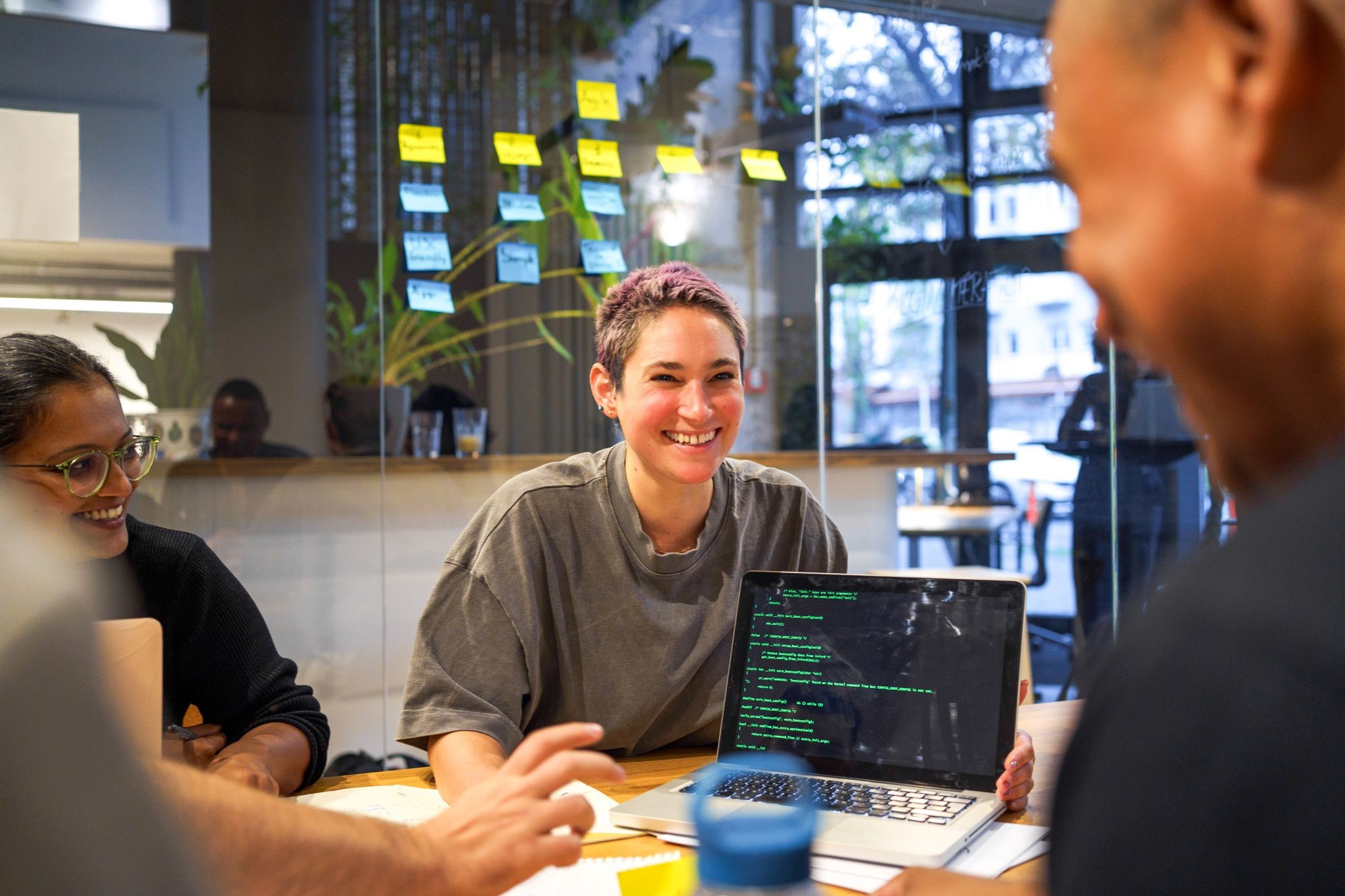
The Swedish capital of Stockholm has more ‘unicorns’ per capita than London, New York and Paris, according to Stockholm Chamber of Commerce (2026). That’s startups valued at more than USD 1 billion.
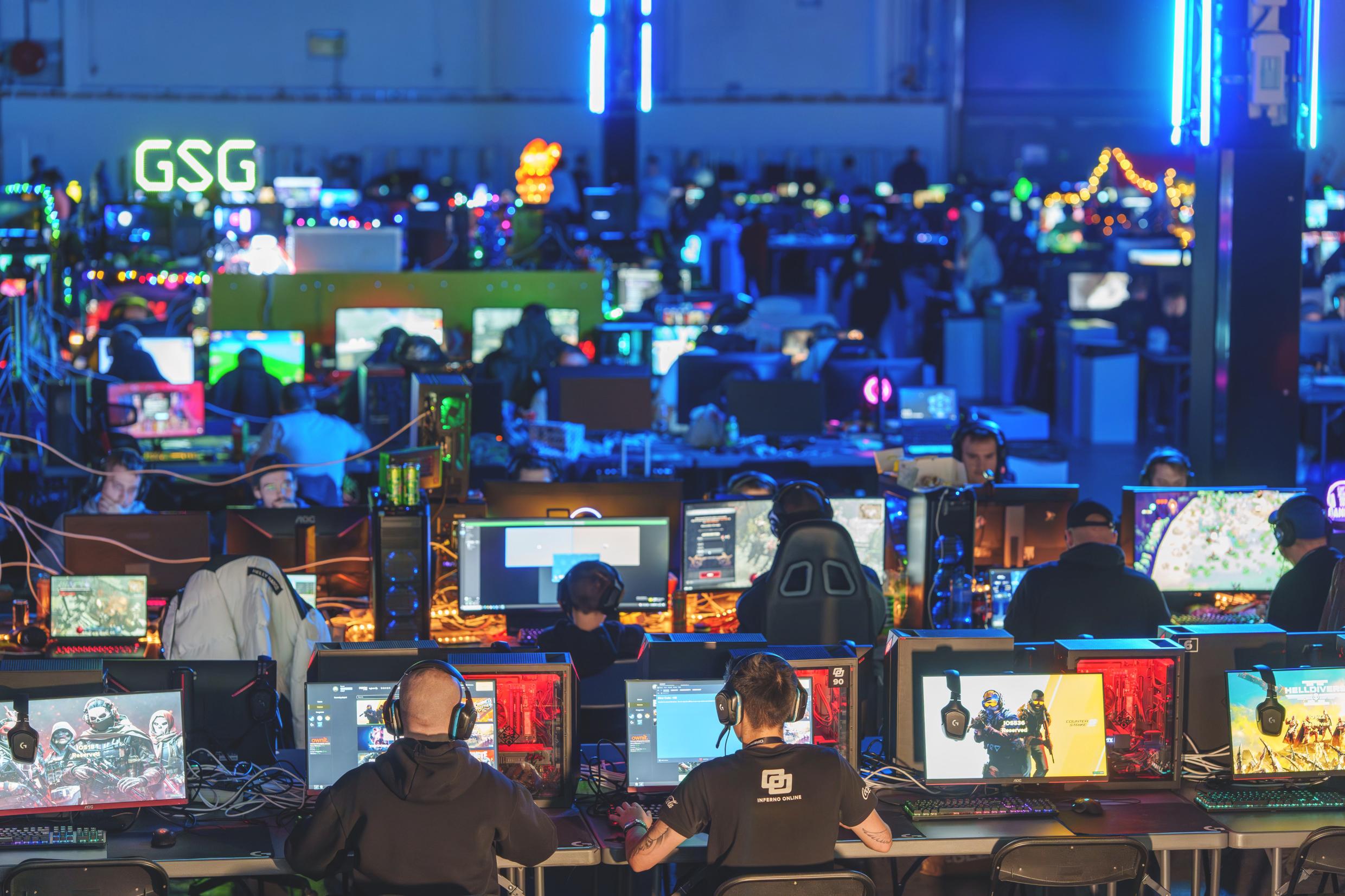
Mojang and King, creators of Minecraft and Candy Crush Saga, are examples of unicorns that have gone from startups to scaleups to gaming giants. Some more recent Swedish successes are autonomous transport company Einride, Legora and its AI-powered legal services, AI coding platform Lovable, healthtech provider Neko Health and energy storage innovator Polarium.
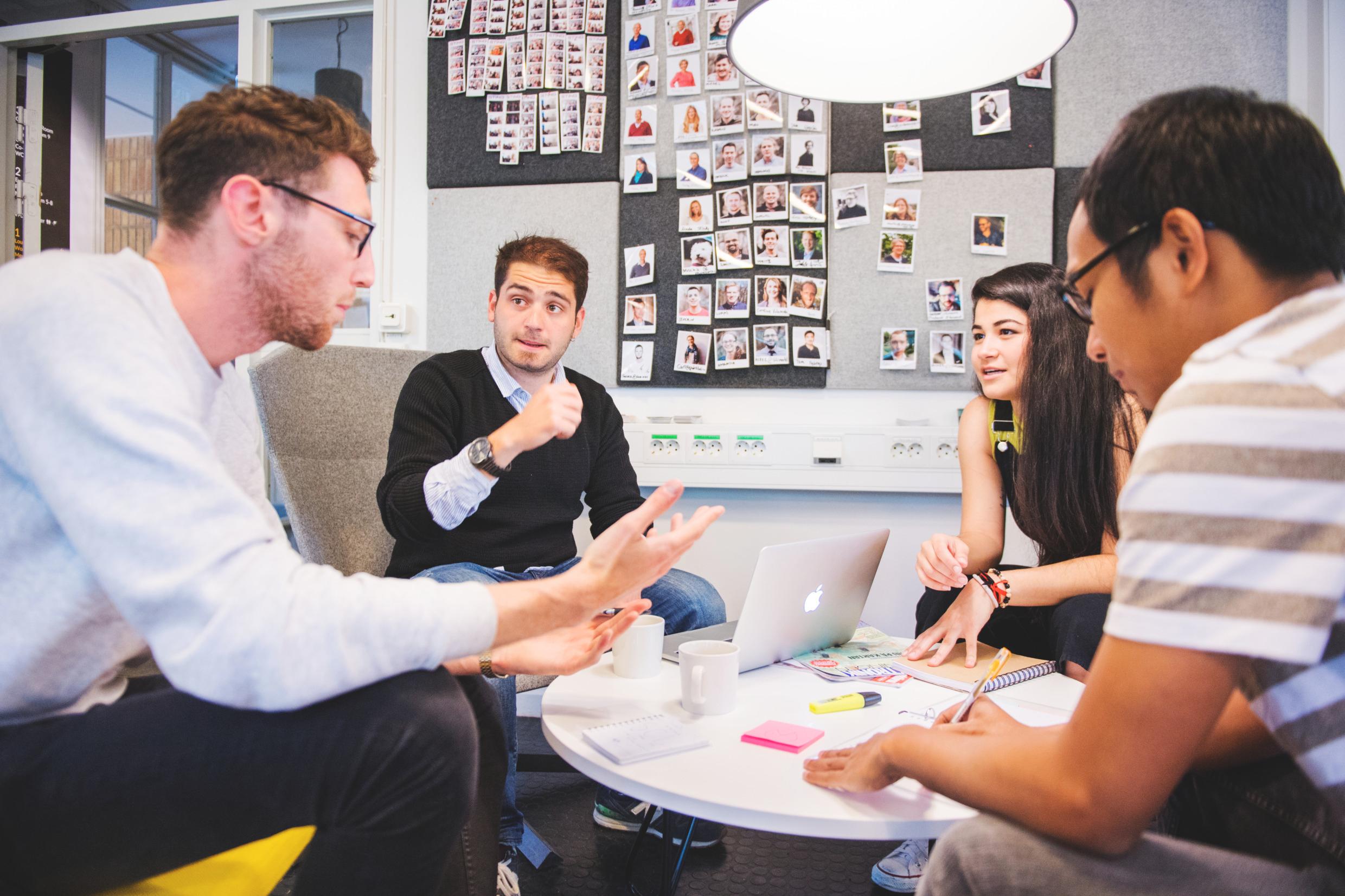
Stockholm being a melting pot of innovation, venture capital and culture has helped build the startup ecosystem. The relatively small size of the city can be another explanation for its success story: top universities and innovative companies are often within walking distance of each other.
In 2025, the European Commission ranked Stockholm as the most innovative region in Europe.




Infrastructure has made innovation possible
Impact aside, Stockholm is only one small part of Sweden. It’s a large country, stretching far from north to south. This is why a well-functioning infrastructure has been vital to Sweden’s development – from railways to telecommunications and broadband. Policies offering access to technology and the internet have contributed to making Sweden the innovative nation it is today.
In the 1990s, the Swedish government pushed out a widely developed broadband network and Swedes’ early access to fast internet coupled with subsidised computer-lending programmes helped cultivate a society of early adopters.
5G and Ericsson
We are now in the era of 5G. The fifth generation of mobile networks is important to Sweden, not only because it offers higher capacity, but also because mobile systems are a core export product.
Ericsson, one of Sweden’s largest companies, has dominated the development of 5G. The telecom company and its work on 5G are part of a major ICT cluster in Kista and Stockholm. This tech ecosystem gives Sweden a great opportunity to contribute to digital transformation of society, locally and globally.

Artificial intelligence in Sweden
In early 2026, the Swedish government adopted a new national AI strategy, with the explicit goal of making Sweden one of the world’s top ten AI nations. The country’s high degree of digitalisation, secure digital infrastructure and world-leading research are some of the major advantages for future AI development.
The strategy states that Sweden should use AI to deliver societal benefit, support sustainable development, and strengthen competitiveness and innovation. The country also aims to be world-leading in the use of AI in public administration.
Sweden’s high global innovation rankings
Considering that Swedes represent just 0.13 per cent of the global population, the Nordic nation has a disproportionate amount of influence on global innovation. Sweden has repeatedly topped the European Innovation Scoreboard, a yearly index published by the European Commission. The index assesses the strengths and weaknesses of national innovation systems and helps countries identify areas they should address.
Sweden also usually achieves high rankings in innovation surveys such as the Global Innovation Index and the Legatum Prosperity Index.
A strong democratic foundation
Swedish society is based on strong democratic values, where free thinking and cooperation is encouraged and it’s okay to try and fail. Today, democracy is more than a moral principle; it’s a competitive advantage. Openness promotes pioneering ideas and stability breeds trust.
In the IMD World Competitiveness Ranking, Sweden ranks as one of the most competitive countries in the world, with top grades for business efficiency and infrastructure.

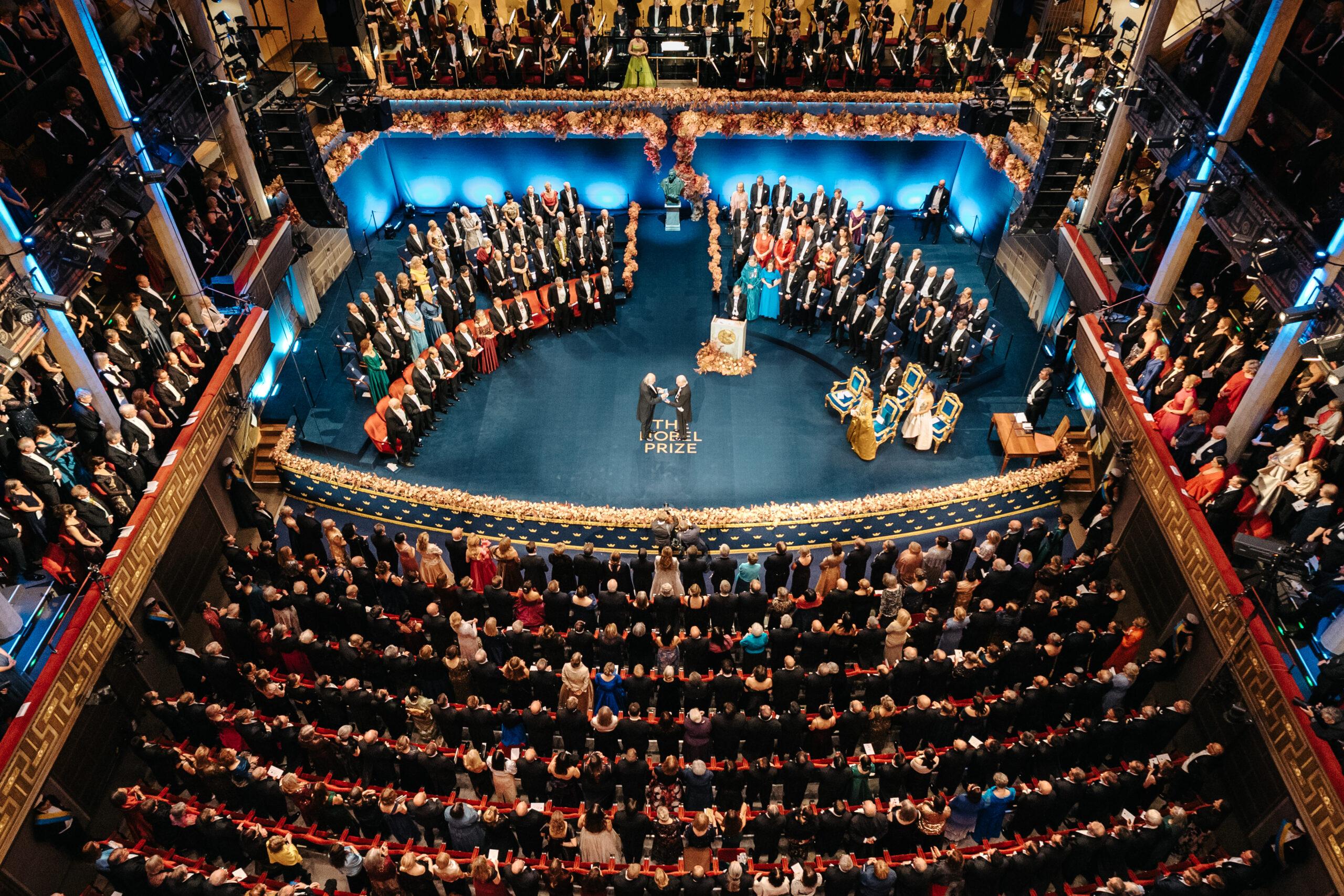
Anne L'Huillier receiving the Nobel Prize in Physics from Swedish King Carl XVI Gustaf in 2023. The prize was awarded to her together with Pierre Agostini and Ferenc Krausz 'for experimental methods that generate attosecond pulses of light for the study of electron dynamics in matter'. Photo: Nanaka Adachi/©Nobel Prize Outreach


Svante Pääbo was awarded the Nobel Prize in Physiology or Medicine in 2022 'for his discoveries concerning the genomes of extinct hominins and human evolution'. Photo: Stefan Bladh/©Nobel Prize Outreach


Tomas Tranströmer was awarded the Nobel Prize in Literature in 2011 'because, through his condensed, translucent images, he gives us fresh access to reality'. Photo: U. Montan/©The Nobel Foundation


A collage of selected Swedish Nobel Prize laureates, clockwise from top left: 1. Alva Myrdal, Peace, 1982 (second person from the right); 2. Gunnar Myrdal, Economics, 1974; 3. Nelly Sachs, Literature, 1966; 4. Dag Hammarskjöld, Peace, 1961 (posthumously); 5. Gustaf Dalén, Physics, 1912; 6. Selma Lagerlöf, Literature, 1909; 7. Svante Arrhenius, Chemistry, 1903.
Photos: 1. Unknown/Wikipedia; 2. Jan de Meyere/Stockholms stadsmuseum; 3. Anna Riwkin/Nobel Foundation archive; 4. libris.kb.se; 5. AGA AB, Lidingö, history archive; 6. libris.kb.se; 7. libris.kb.se
Anne L'Huillier receiving the Nobel Prize in Physics from Swedish King Carl XVI Gustaf in 2023. The prize was awarded to her together with Pierre Agostini and Ferenc Krausz 'for experimental methods that generate attosecond pulses of light for the study of electron dynamics in matter'. Photo: Nanaka Adachi/©Nobel Prize Outreach
Svante Pääbo was awarded the Nobel Prize in Physiology or Medicine in 2022 'for his discoveries concerning the genomes of extinct hominins and human evolution'. Photo: Stefan Bladh/©Nobel Prize Outreach
Tomas Tranströmer was awarded the Nobel Prize in Literature in 2011 'because, through his condensed, translucent images, he gives us fresh access to reality'. Photo: U. Montan/©The Nobel Foundation
A collage of selected Swedish Nobel Prize laureates, clockwise from top left: 1. Alva Myrdal, Peace, 1982 (second person from the right); 2. Gunnar Myrdal, Economics, 1974; 3. Nelly Sachs, Literature, 1966; 4. Dag Hammarskjöld, Peace, 1961 (posthumously); 5. Gustaf Dalén, Physics, 1912; 6. Selma Lagerlöf, Literature, 1909; 7. Svante Arrhenius, Chemistry, 1903.
Photos: 1. Unknown/Wikipedia; 2. Jan de Meyere/Stockholms stadsmuseum; 3. Anna Riwkin/Nobel Foundation archive; 4. libris.kb.se; 5. AGA AB, Lidingö, history archive; 6. libris.kb.se; 7. libris.kb.se
Anne L'Huillier receiving the Nobel Prize in Physics from Swedish King Carl XVI Gustaf in 2023. The prize was awarded to her together with Pierre Agostini and Ferenc Krausz 'for experimental methods that generate attosecond pulses of light for the study of electron dynamics in matter'. Photo: Nanaka Adachi/©Nobel Prize Outreach
Svante Pääbo was awarded the Nobel Prize in Physiology or Medicine in 2022 'for his discoveries concerning the genomes of extinct hominins and human evolution'. Photo: Stefan Bladh/©Nobel Prize Outreach
Tomas Tranströmer was awarded the Nobel Prize in Literature in 2011 'because, through his condensed, translucent images, he gives us fresh access to reality'. Photo: U. Montan/©The Nobel Foundation
A collage of selected Swedish Nobel Prize laureates, clockwise from top left: 1. Alva Myrdal, Peace, 1982 (second person from the right); 2. Gunnar Myrdal, Economics, 1974; 3. Nelly Sachs, Literature, 1966; 4. Dag Hammarskjöld, Peace, 1961 (posthumously); 5. Gustaf Dalén, Physics, 1912; 6. Selma Lagerlöf, Literature, 1909; 7. Svante Arrhenius, Chemistry, 1903.
Photos: 1. Unknown/Wikipedia; 2. Jan de Meyere/Stockholms stadsmuseum; 3. Anna Riwkin/Nobel Foundation archive; 4. libris.kb.se; 5. AGA AB, Lidingö, history archive; 6. libris.kb.se; 7. libris.kb.se
Timeline of Swedish Nobel Prize winners
Sweden doesn't only pride itself on high innovation rankings and global businesses, but also on the country's track record of producing laureates of the Nobel Prize and the Sveriges Riksbank Prize in Economic Sciences in Memory of Alfred Nobel* (names in bold are featured in the image gallery above):
- Anne L'Huillier, Physics, 2023
- Svante Pääbo, Physiology or Medicine, 2022
- Tomas Lindahl, Chemistry, 2015
- Tomas Tranströmer, Literature, 2011
- Arvid Carlsson, Physiology or Medicine, 2000
- Alva Myrdal, Peace, 1982
- Sune Bergström, Physiology or Medicine, 1982
- Bengt I. Samuelsson, Physiology or Medicine, 1982
- Kai Siegbahn, Physics, 1981
- Torsten Wiesel, Physiology or Medicine, 1981
- Bertil Ohlin, Economics, 1977
- Eyvind Johnson, Literature, 1974
- Harry Martinson, Literature, 1974
- Gunnar Myrdal, Economics, 1974
- Ulf von Euler, Physiology or Medicine, 1970
- Hannes Alfvén, Physics, 1970
- Ragnar Granit, Physiology or Medicine, 1967
- Nelly Sachs, Literature, 1966
- Dag Hammarskjöld, Peace, 1961 (posthumously)
- Hugo Theorell, Physiology or Medicine, 1955
- Pär Lagerkvist, Literature, 1951
- Arne Tiselius, Chemistry, 1948
- Erik Axel Karlfeldt, Literature, 1931 (posthumously)
- Nathan Söderblom, Peace, 1930
- Hans von Euler-Chelpin, Chemistry, 1929
- Theodor Svedberg, Chemistry, 1926
- Manne Siegbahn, Physics, 1924
- Hjalmar Branting, Peace, 1921
- Verner von Heidenstam, Literature, 1916
- Gustaf Dalén, Physics, 1912
- Allvar Gullstrand, Physiology or Medicine, 1911
- Selma Lagerlöf, Literature, 1909
- Pontus Arnoldson, Peace, 1908
- Svante Arrhenius, Chemistry, 1903
*'Swedish' in this context means that the person has/had a strong connection to Sweden.
Sweden is hiring
Many Swedish companies seek new talent from all over the world. Great things can happen when people with different backgrounds work together. Are you curious? Click below.