


10 must-read Swedish books
Swedish fiction continues to have a global appeal. Here are 10 Swedish books in English, selected for you by Swedish Book Review.
(Make note: This list of books from Sweden is not a ranking – it’s a curated selection ordered alphabetically.)

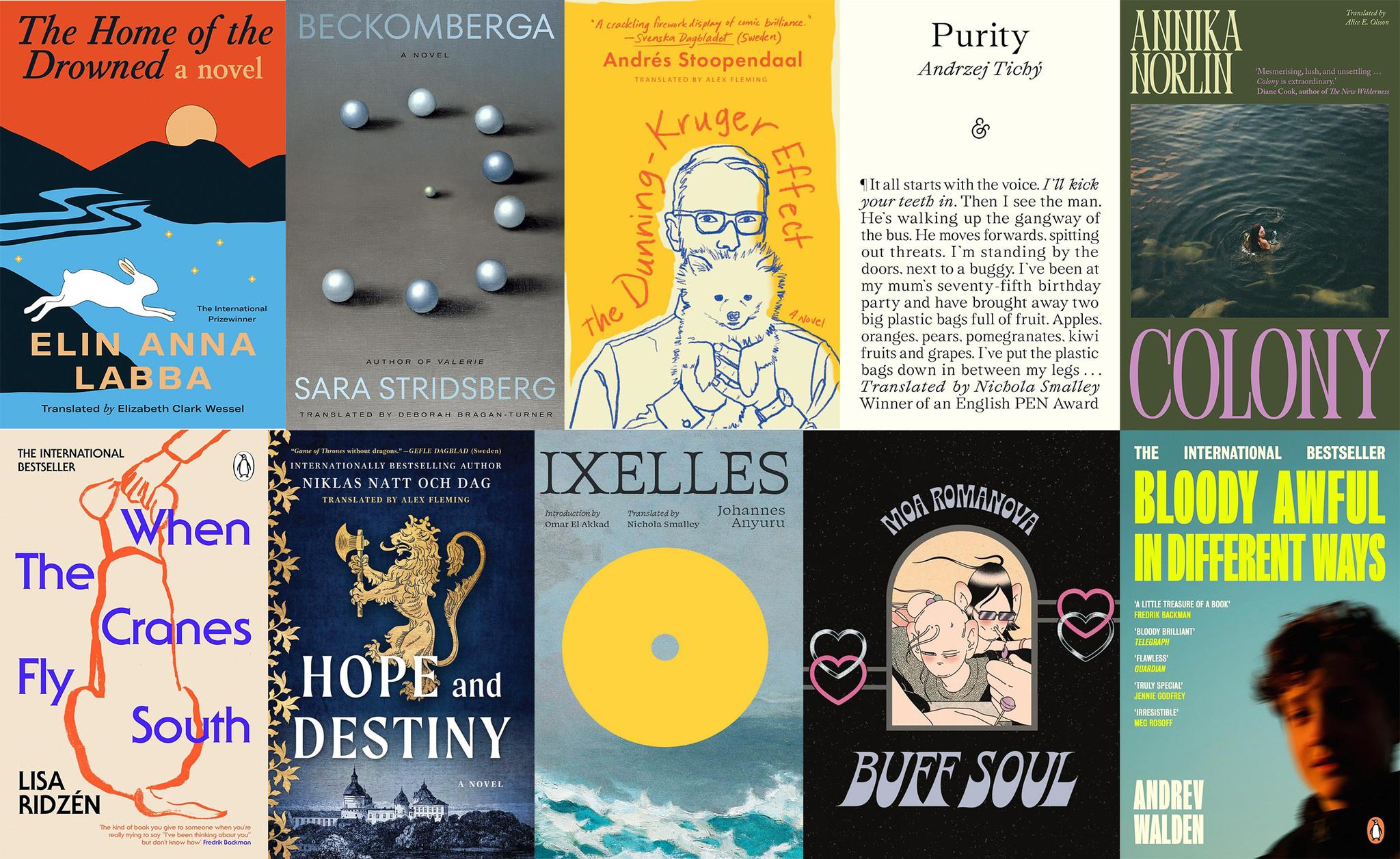
1. Ixelles, by Johannes Anyuru
Translated by Nichola Smalley (2024)
Acclaimed writer Johannes Anyuru returns with a searing meditation on love, loss, fiction and dreams. Ixelles is a shimmering, polyphonic novel that follows Ruth, a young single mother whose job for the mysterious ‘Agency’ revolves around creating narratives to shape public opinion. When a lucrative new project takes her back to the socially deprived spaces of her youth, a discovery is made that blurs the boundaries between life and death.
Combining gritty social realism with tenderness and a speculative edge, Ixelles is a deeply humane, ambitious work that explores the stories we live our life by, and the meaning of truth in a world of many fictions.

2. The Home of the Drowned, by Elin Anna Labba
(Far inte till havet)
Translated by Elizabeth Clark Wessel (2026)
This novel by the highly regarded, prize-winning Sami writer Elin Anna Labba has consistently had positive reviews at home. Critics love both its compelling, inter-generational narrative reaching back almost a century, and its lyrical yet also gritty prose style. There is real subtlety in Labba’s story – she shows how those who reject compliance will be branded by almost everyone, including some in their own communities.
The Home of the Drowned is a tale of defiance and resistance, in which generations of Sami women respond to the forced seizures of ancestral Sami lands in the 1940s, during the construction of a hydroelectric dam by the Swedish state.
3. Hope and Destiny, by Niklas Natt och Dag
(Ödet och hoppet)
Translated by Alex Fleming (2025)
Niklas Natt och Dag is known for his uniquely styled, historical suspense fiction. His widely admired Bellman noir trilogy was set in 18th-century Stockholm, while Hope and Destiny, the first of his new planned suit of novels, plays out in the Medieval era. In a murky, undocumented world, he tries to shine a light on what is almost unknowable: the notorious, still-unsolved murder of Engelbrekt, a legendary freedom fighter cut down in his prime.
Natt och Dag, a member of one of the oldest surviving noble families in Sweden, even has the unusual option of inserting his own ancestor into the plot. Which, in a certain way, adds another layer to this mystery.


In Hope and Destiny, Niklas Natt och Dag takes his readers back to Medieval times. Photo (montage): Simon & Schuster and Gabriel Liljevall/Salomonsson Agency

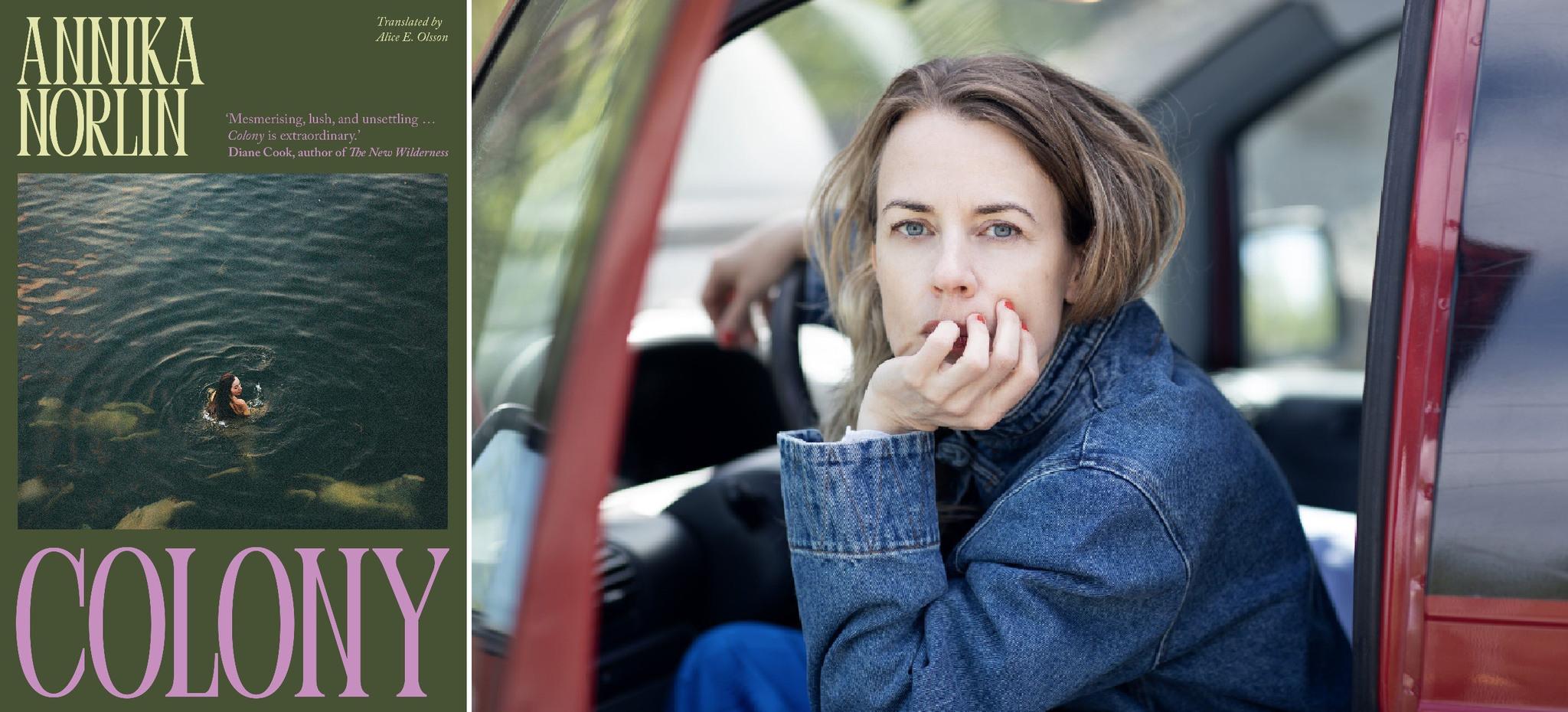
In Colony, Annika Norlin explores what happens when a group of misfits decide to life off-grid together. Photos: Scribe Publications, Weyler förlag

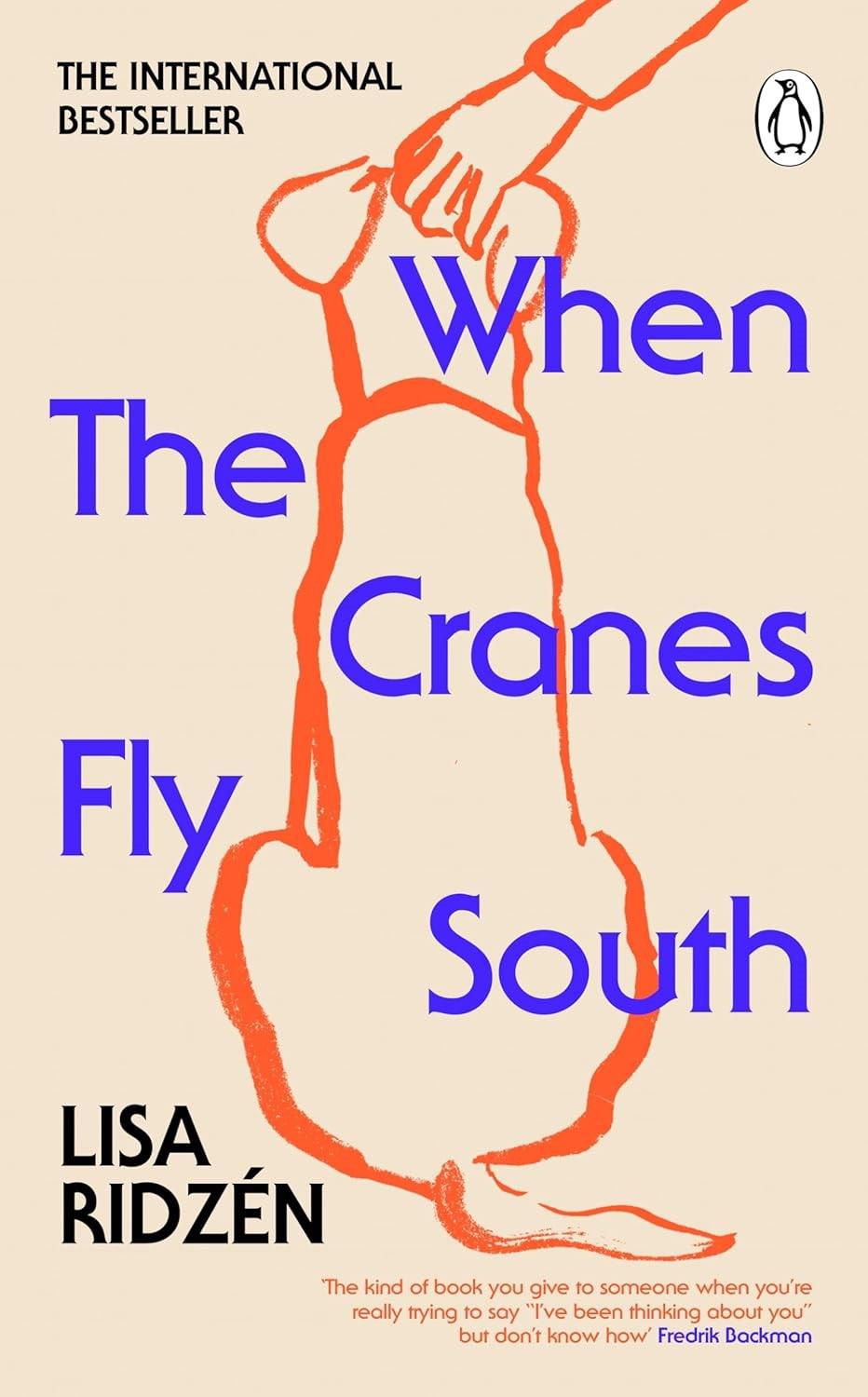
When The Cranes Fly South is Lisa Ridzén's debut novel. Photo: Penguin
In Hope and Destiny, Niklas Natt och Dag takes his readers back to Medieval times. Photo (montage): Simon & Schuster and Gabriel Liljevall/Salomonsson Agency
In Colony, Annika Norlin explores what happens when a group of misfits decide to life off-grid together. Photos: Scribe Publications, Weyler förlag
When The Cranes Fly South is Lisa Ridzén's debut novel. Photo: Penguin
In Hope and Destiny, Niklas Natt och Dag takes his readers back to Medieval times. Photo (montage): Simon & Schuster and Gabriel Liljevall/Salomonsson Agency
In Colony, Annika Norlin explores what happens when a group of misfits decide to life off-grid together. Photos: Scribe Publications, Weyler förlag
When The Cranes Fly South is Lisa Ridzén's debut novel. Photo: Penguin
Some Swedish classics
- Crisis (Kris) by Karin Boye; translated by Amanda Doxtater (2020)
- Witches’ Rings (Häxringarna, The Women and the City quartet) by Kerstin Ekman; translated by Linda Schenck (2021)
- Gösta Berling’s Saga (Gösta Berlings saga) by Selma Lagerlöf; translated by Paul Norlen (2009)
- The Red Room (Röda rummet) by August Strindberg; translated by Peter Graves (2009)
- Doctor Glas (Doktor Glas) by Hjalmar Söderberg; translated by Paul Britten Austin (1963, reprinted 2019)
4. Colony, by Annika Norlin
(Stacken)
Translated by Alice E. Olsson (2025)
Suffering from burnout, drained Emelie leaves the big city in search of calm seclusion in the Swedish forest. There she happens across a mixed group of misfits who have carved out an alternative life for themselves off-grid. While Emelie is at first drawn to this seemingly idyllic community, her appearance comes to challenge the colony’s delicate status quo.
In this enthralling debut, Annika Norlin – who is also a well-known singer in Sweden – deftly explores power, community and the messy ties that bind us. Colony is a must for readers who appreciate juicy character portraits, slow-burn tension and incisive, often humorous social commentary.
5. When the Cranes Fly South, by Lisa Ridzén
(Tranorna flyger söderut)
Translated by Alice Menzies (2025
Few writers convey the vulnerability of old age as poignantly as Lisa Ridzén does in this stellar debut, a tender study of ageing, family, love and loss.
When the Cranes Fly South is about Bo, an elderly man who lives a simple life with his beloved dog, Sixten. But as his health and body start to fail him, he must fight for his autonomy. Written in diary format, in a spare prose that reflects a life lived with quiet dignity, Bo looks back over his life, contemplating his relationship with his adult son and the kind of father he wishes he could be. The result is a thoughtful, bittersweet novel that runs deep. Our advice: have a tissue handy.
6. Buff Soul, by Moa Romanova
(På glid)
Translated by Melissa Bowers (2025)
When cartoonist Moa Romanova joins her rock musician bestie on a US tour of her band, known as Shitkid, life turns dysfunctional. The past comes back to haunt her, and they all immerse themselves in what bands are expected to do – partying, drinking and flirting with self-destruction. All the while, the spectre of death hangs over them, both speculation on their own endings and those of friends already departed.
Buff Soul, a full-throttle road-trip adventure, is an innovative work of graphic art by an emerging name. Romanova's debut work Goblin Girl won the prestigious Eisner Award in 2021 for Best U.S. Edition of International Material.


Moa Romanova is a graphic novelist on the rise. Photo (montage): Fantagraphics Inc. and Fredrika Eriksson/Kaunitz-Olsson

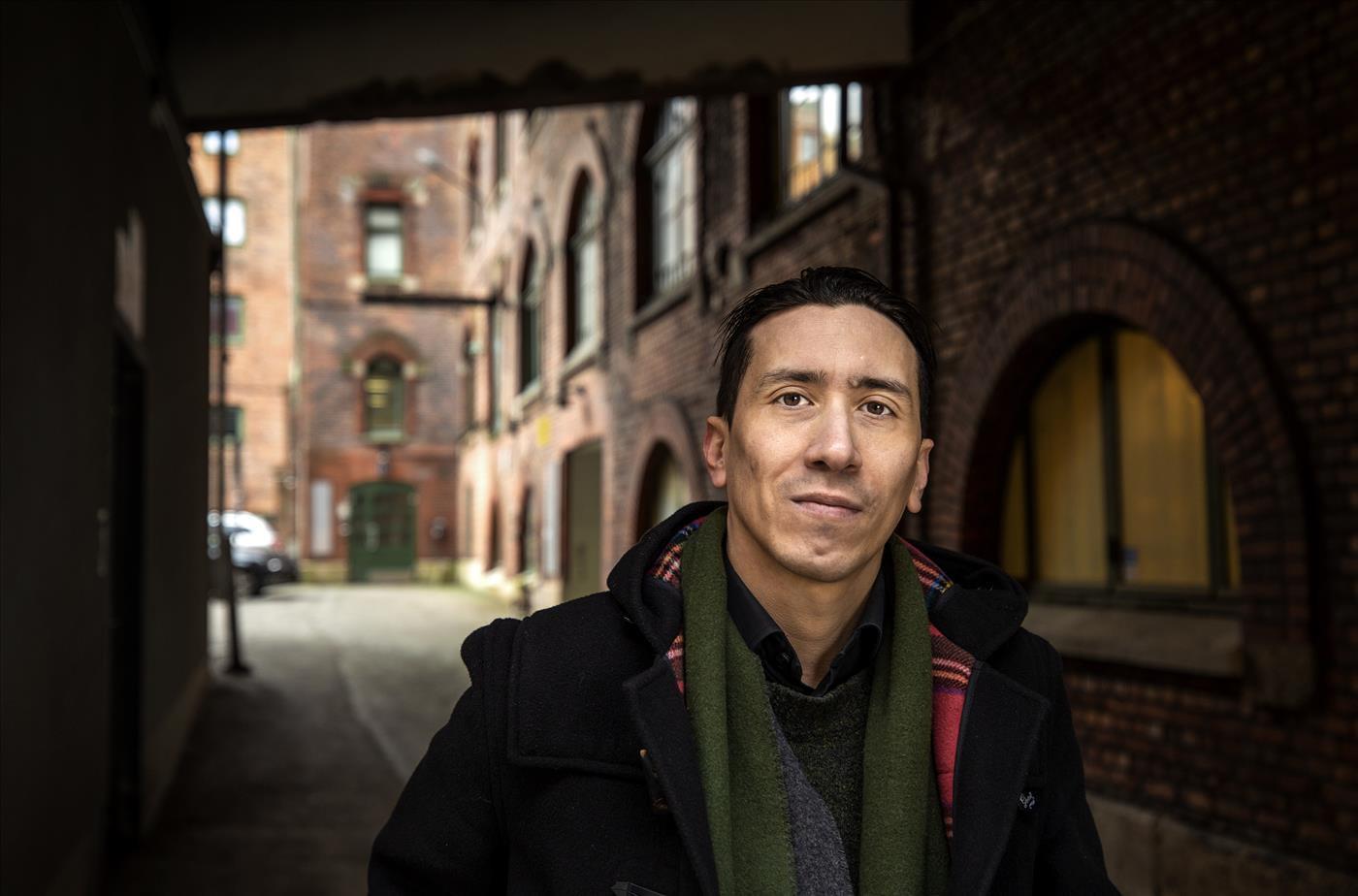
Andrés Stoopendaal's The Dunning-Kruger Effect is a blistering satire on the follies of our age. Photo: Sören Håkanlind/Norstedts


Sara Stridsberg's Beckomberga is named after an old psychiatric hospital in Stockholm. Photo (montage): Macmillan Publishers and Sara Mac Key/Albert Bonniers förlag
Moa Romanova is a graphic novelist on the rise. Photo (montage): Fantagraphics Inc. and Fredrika Eriksson/Kaunitz-Olsson
Andrés Stoopendaal's The Dunning-Kruger Effect is a blistering satire on the follies of our age. Photo: Sören Håkanlind/Norstedts
Sara Stridsberg's Beckomberga is named after an old psychiatric hospital in Stockholm. Photo (montage): Macmillan Publishers and Sara Mac Key/Albert Bonniers förlag
Moa Romanova is a graphic novelist on the rise. Photo (montage): Fantagraphics Inc. and Fredrika Eriksson/Kaunitz-Olsson
Andrés Stoopendaal's The Dunning-Kruger Effect is a blistering satire on the follies of our age. Photo: Sören Håkanlind/Norstedts
Sara Stridsberg's Beckomberga is named after an old psychiatric hospital in Stockholm. Photo (montage): Macmillan Publishers and Sara Mac Key/Albert Bonniers förlag
7. The Dunning-Kruger Effect, by Andrés Stoopendaal
(Dunning-Kruger Effekten)
Translated by Alex Fleming (2024)
Over the course of a gruelling Gothenburg heatwave, a preoccupied millennial decides to get his life in order and write a book. In The Dunning-Kruger Effect we follow this man’s emotional, existential and literary journey – via numerous digressions, minor misadventures and off-kilter musings on everything from identity politics to Michel Houellebecq to Grumpy Cat. Along the way we gain a fascinating portrait not only of a man belatedly coming of age (or not?), but also of the times and discourses that made him.
While the narrator’s grandiloquent style and intellectual posturing won’t be to everyone’s taste, this critics’ favourite offers a delicious, often blistering satire on the follies of our age.

8. Beckomberga, by Sara Stridsberg
(Beckomberga, Ode till min familj)
Translated by Deborah Bragan-Turner (2026)
Written by one of Sweden’s most acclaimed literary talents, Beckomberga is set in a psychiatric hospital in Stockholm, where a father has been sectioned after numerous suicide attempts. His visiting daughter provides the voice of the story across a span of time from her early teenage years to adulthood.
Sara Stridsberg avoids the obvious trope of the mental asylum as a place of mental anguish and captivity, presenting it more as a refuge or even, as one reviewer commented, a sort of spiritual retreat. Possibly the magic lies in Stridsberg’s weaving of perspectives, creating a world filled with the wonder of thinking and being alive.
...and a few beloved Swedish children’s books
Fire From The Sky (Himlabrand) by Moa Backe Åstot; translated by Eva Apelqvist (2023)- Pippi Longstocking (Pippi Långstrump) by Astrid Lindgren, illustrated by Ingrid Vang Nyman; translated by Susan Beard (2020)
- We Are Lions! (Vi är lajon!) by Jens Mattsson, illustrated by Jenny Lucander; translated by B.J. Woodstein (2023)
- The Night Raven (Nattkorpen) by Johan Rundberg; translated by A.A. Prime (2023)
- Can You Whistle, Johanna? (Kan du vissla Johanna?) by Ulf Stark, illustrated by Anna Höglund; translated by Julia Marshall (2021)

9. Purity, by Andrzej Tichý
(Renheten)
Translated by Nichola Smalley (2024)
In this challenging yet captivating work, Andrej Tichý details lives lived on the fringes of society. Touching on themes of migration, poverty, power and violence, the dynamic, hard-hitting short stories that make up this collection all revolve around characters struggling to fit within the violent structures of modern civilisation.
An eminent stylist, Tichý’s prose masterfully combines brutal, keenly observed social realism with lyrical flair, in a punchy, stream-of-consciousness style that often subverts our expectations. The result, Purity, is a charged collection of stories with a raw, propulsive magnetism. The book was a finalist for the 2021 Nordic Council Literature Prize.
The Astrid Lindgren Memorial Award
The annual ALMA prize is the biggest children’s book prize in the world, worth SEK 5 million. It honours the Swedish children's book writer Astrid Lindgren and promotes every child’s right to great stories.

10. Bloody Awful in Different Ways, by Andrev Walden
(Jävla karlar)
Translated by Ian Giles (2025)
On its release in Sweden, this semi-autobiographical debut achieved almost unprecedented success – both as a bestseller and winner of the prestigious Swedish August Prize. As an account of a difficult childhood and the tail-end of the movement of 1968, Bloody Awful in Different Ways proved to have huge appeal.
The narrative begins with a heated argument, in which a young boy learns that his father is actually not his father at all, which isn’t entirely unwelcome news, but on the other hand there’s no firm information about his real father either. In the next seven years, the boy has to deal with a rotation of seven different stepfathers, with all the harrowing events and family infractions one might expect as a result. Yet somehow there continues to be a rich and defining vein of humour, expressed through the hopeful lens of a young person doing his best to grow up – in spite of the chaos that surrounds him.