



The Lucia tradition
What does midwinter have to do with white gowns and candles? It’s Swedish Lucia!
Lucia − the bearer of light
Alongside Midsummer, Lucia represents one of the foremost traditional celebrations in Sweden. Both have clear references to life in the peasant communities of old: darkness and light, cold and warmth.
Lucia is an ancient mythical figure with an abiding role as a bearer of light in the dark Swedish winters.
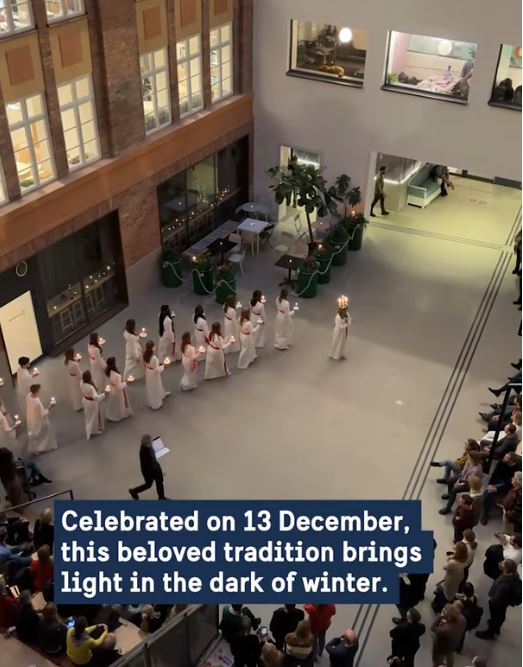
The candlelit Lucia procession on 13 December is one of Sweden’s more exotic-looking customs.
White gowns across the country
Across Sweden – in schools and preschools, churches, workplaces, town squares, and countless choral and community events – Lucia processions take many forms.
Children’s groups, youth choirs and adult choirs – from keen amateurs to professionals – each perform in their own settings, dressed in white full-length gowns.
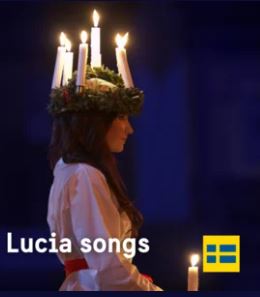
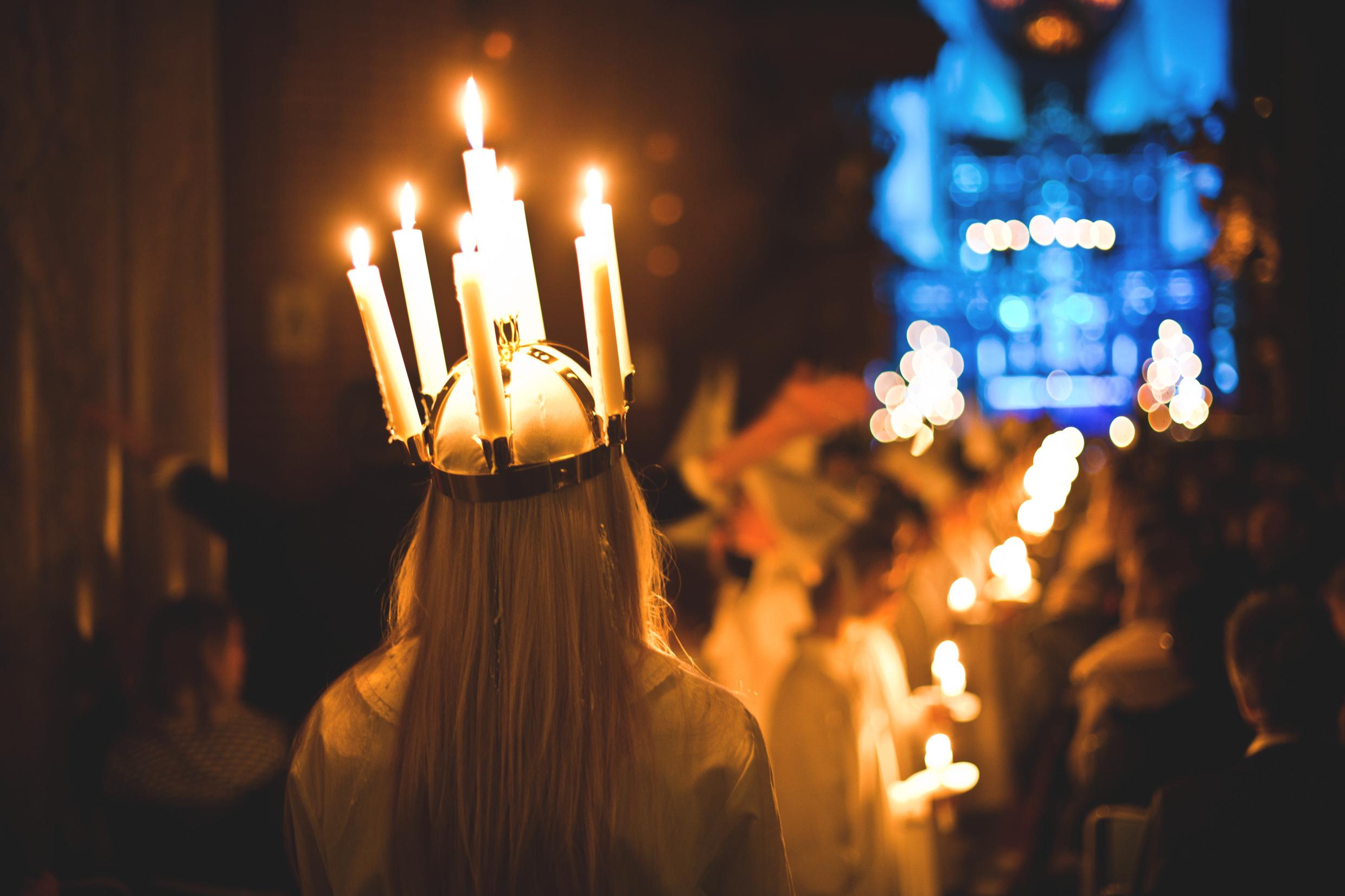
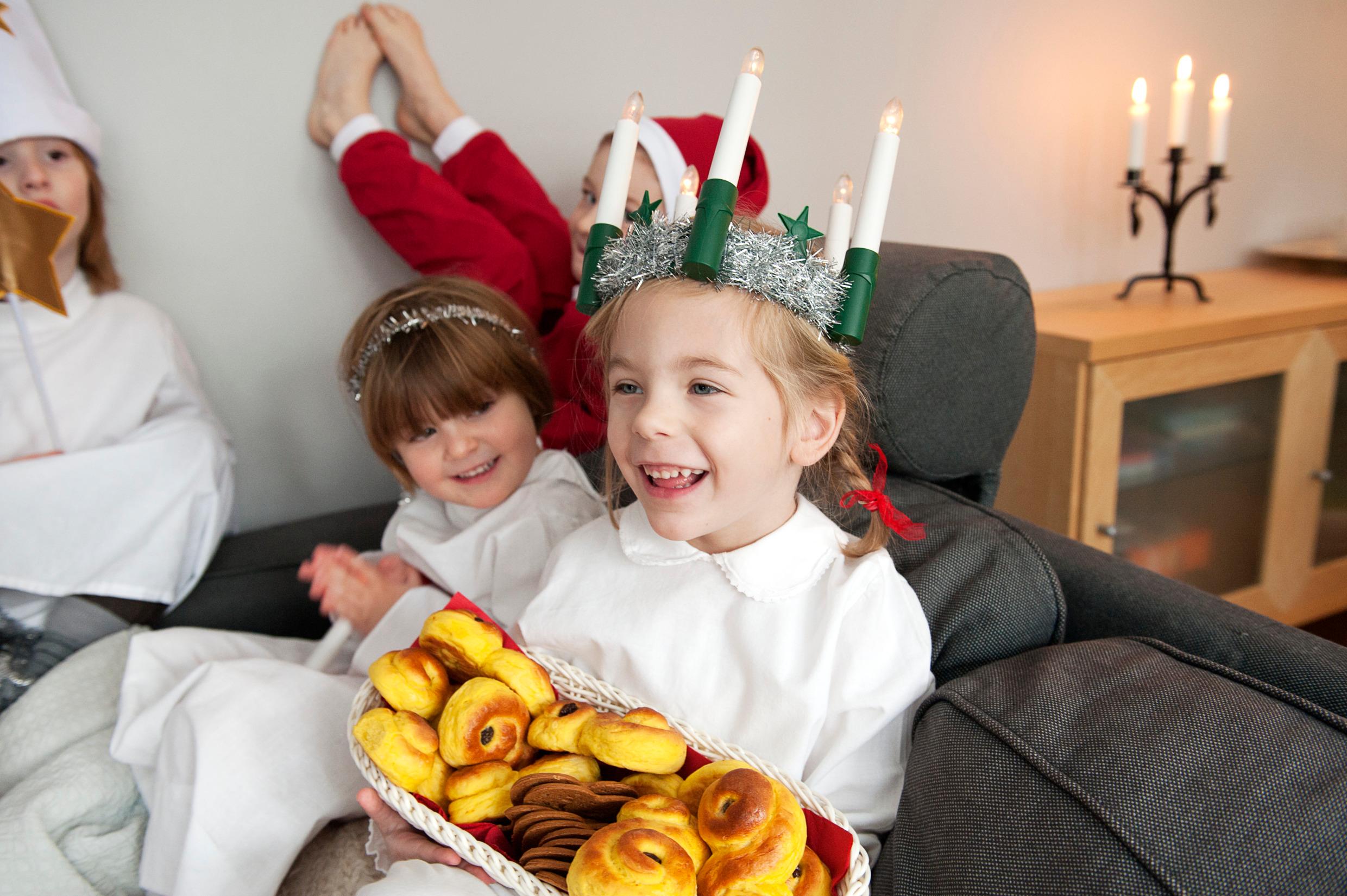
Tradition has it that Lucia is to wear ‘light in her hair’, which today usually means a crown of electric candles in a wreath on her head. Each of her handmaidens carries a candle, too.
The star boys, who are dressed in white gowns like the handmaidens, carry stars on sticks and have tall paper cones on their heads. The Christmas elves bring up the rear, carrying small lanterns.
A recurring theme
A common thread runs through the many traditional songs sung during the Lucia celebrations: the triumph of light over darkness as Lucia appears.
Among these pieces, one stands out as the main Lucia song – the version almost every Swede knows by heart. It traditionally frames the Lucia processions, which most often enter and exit to this very melody:
(first verse, translated)
The night treads heavily
around yards and dwellings.
In places unreached by sun,
the shadows brood.
Into our dark house she comes,
bearing lighted candles –
Saint Lucia, Saint Lucia.
Sweets sure are involved
No Lucia celebration is complete without the traditional treats, many will argue. These include gingerbread biscuits and sweet saffron-flavoured buns (lussekatter), shaped like curled-up cats with raisin eyes. You eat them with glögg – Swedish mulled wine, which also comes in alcohol-free variants – or with coffee or tea.
The origins of Lucia
The Swedish Lucia custom appears to be a blend of traditions.
The tradition can be traced back both to the martyr St Lucia of Syracuse (died in 304) and to the Swedish legend of Lucia as Adam’s first wife.
In the old almanac, Lucia Night was the longest of the year. It was a dangerous night when supernatural beings were abroad and all animals could speak. By morning, the livestock needed extra feed. People, too, needed extra nourishment and were urged to eat seven or nine hearty breakfasts.
The last person to rise that morning was nicknamed ‘Lusse the Louse’ and given a playful beating round the legs with birch twigs. In agrarian Sweden, young people used to dress up as Lucia figures (lussegubbar) that night and wander from house to house singing songs and scrounging for food and schnapps.
The modernisation of Lucia
The first recorded appearance of a white-clad Lucia in Sweden was in a country house in 1764.
The custom did not become universally popular in Swedish society until the 1900s, when schools and local associations began promoting it.
Older customs virtually disappeared with urban migration, and white-clad Lucias with their singing processions were considered a more acceptable, controlled form of celebration than the youthful carousals of the past.
Stockholm proclaimed its first Lucia in 1927. The custom whereby Lucia serves coffee and buns (lussekatter) dates back to the 1880s.